
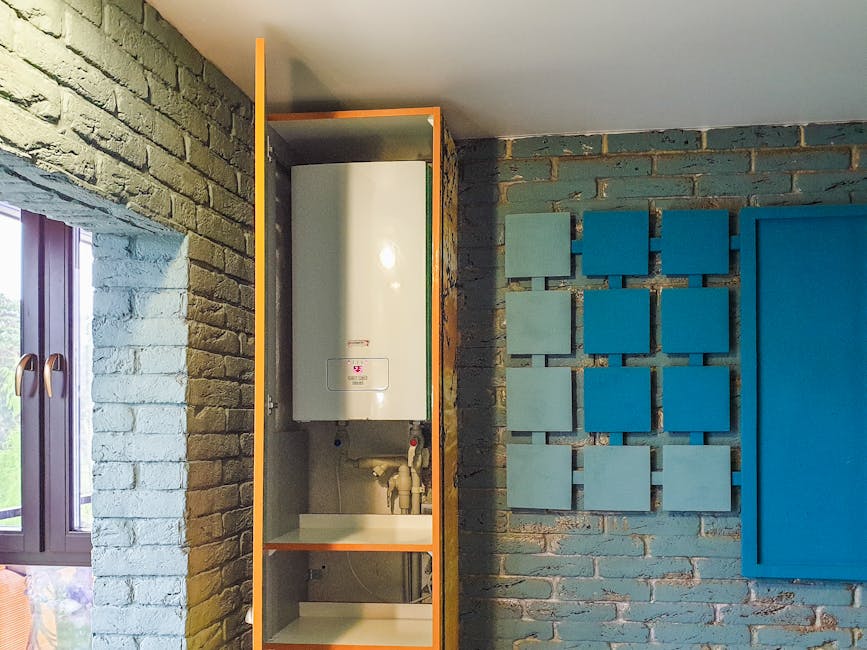
Why a Continuous Water Heater Could Be the Smartest Upgrade for Your Home
A continuous water heater — also called a tankless or on-demand water heater — heats water only when you need it, so you never run out and never pay to keep a tank warm.
Here’s what you need to know at a glance:
| Feature | Continuous Water Heater |
|---|---|
| Hot water supply | Endless — heats on demand |
| Energy use | Lower — no standby heat loss |
| Size | Compact, wall-mounted |
| Fuel types | Gas (natural or LPG) or electric |
| Best for | Homes, businesses, and RVs |
If your water heater just gave out — or you’re tired of cold showers and high energy bills — you’re not alone. Many homeowners in Sandy, UT are making the switch from bulky storage tanks to continuous flow systems for one simple reason: they work better and cost less to run over time.
I’m Reese Mitchell, owner of Great Basin Plumbing, and I’ve installed and repaired continuous water heaters across the region for years. In this guide, I’ll walk you through everything you need to know to decide if a continuous water heater is right for your home.
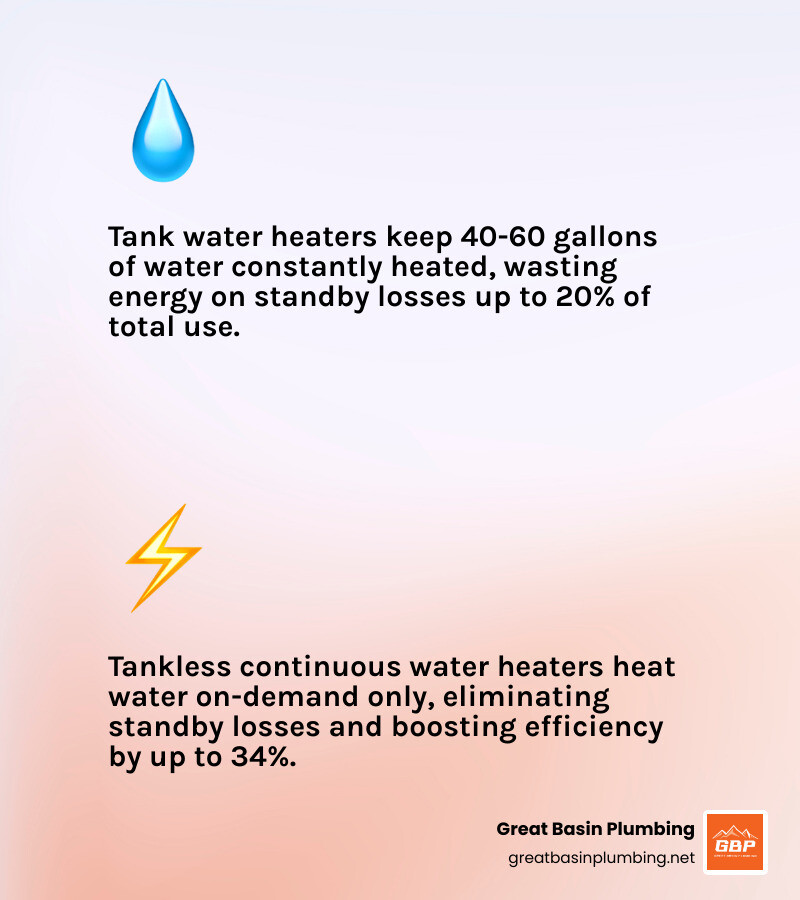
Important continuous water heater terms:
How a Continuous Water Heater Works
To understand why a continuous water heater is such a game-changer, you have to look at what’s happening inside that small metal box on your wall. Unlike a traditional tank that sits there cooking 50 gallons of water all day (even while you’re at work or sleeping), a tankless unit stays dormant until it’s called into action.
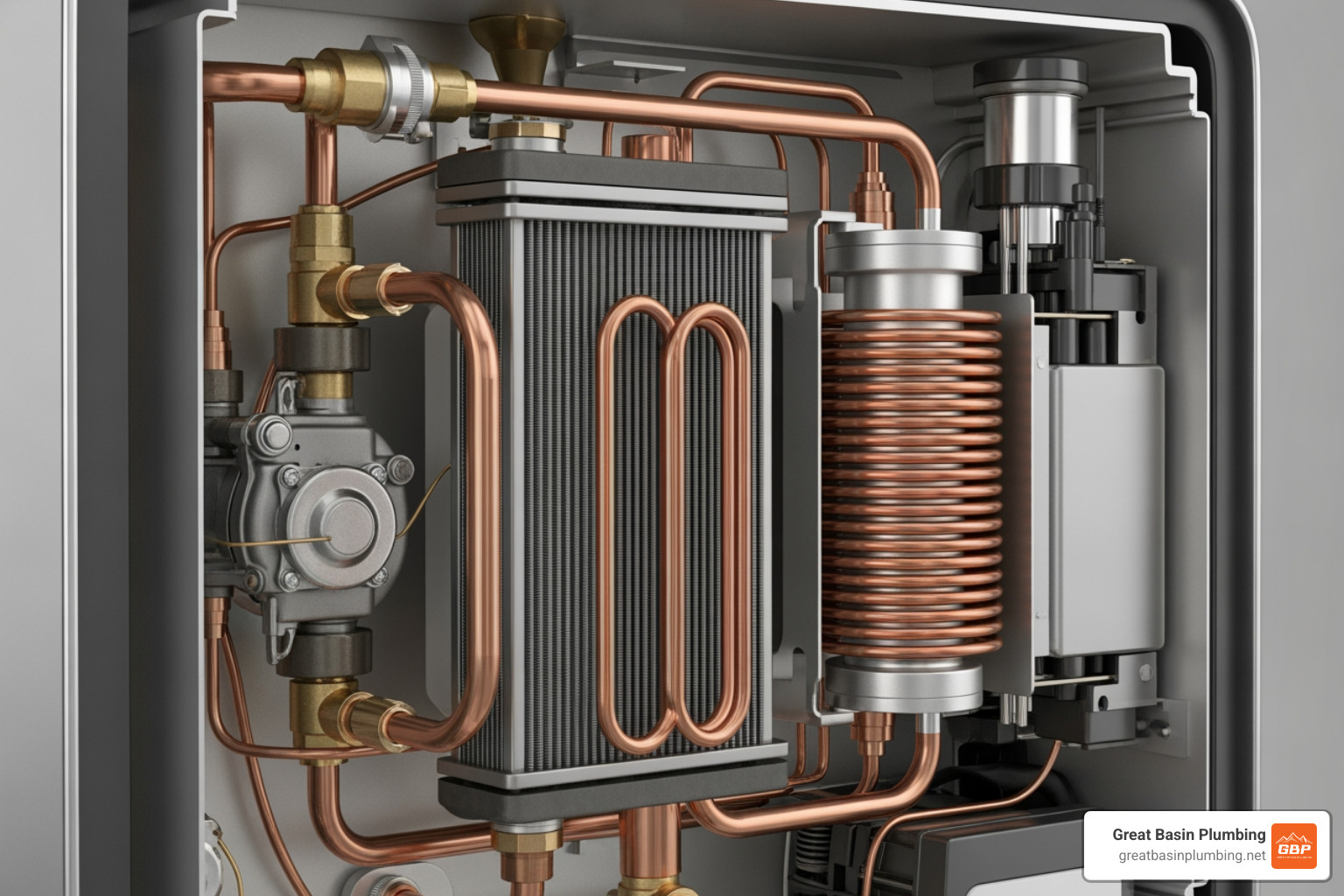
The magic happens through a sequence of high-tech events. When you turn on a hot water tap anywhere in your home—whether it’s the kitchen sink in Draper or a shower in Ogden—cold water enters the unit. A flow sensor detects this movement and sends a signal to the internal computer (the microprocessor). This “brain” of the unit then ignites the burner and adjusts the gas or electric input to match your desired temperature.
The water circulates through a sophisticated heat exchanger, absorbing heat instantly before exiting the unit and traveling to your faucet. The moment you turn that tap off, the unit shuts down. It’s a precision-engineered process designed to provide exactly what you need, exactly when you need it. For those interested in the technical specs of high-output units, you can explore the Non-condensing Continuous Flow 32L | Dux Hot Water to see how these systems handle heavy loads.
The Role of Heat Exchangers and Flow Sensors
The heat exchanger is the heart of the continuous water heater. Most high-quality models use commercial-grade copper or stainless steel components because they transfer heat incredibly fast.
The flow sensor is the “trigger.” In many modern units, the minimum flow rate required to ignite the system is as low as 1.5 to 2.5 liters per minute. This means even a low-flow faucet can activate the heater. Once activated, the microprocessor performs thousands of calculations per second, modulating the flame or electrical elements to ensure the water doesn’t fluctuate in temperature. This prevents that dreaded “cold water sandwich” effect that older tankless models sometimes suffered from.
Condensing vs. Non-Condensing Technology
When you’re shopping for a continuous water heater in Utah, you’ll likely hear the terms “condensing” and “non-condensing.”
- Non-Condensing: These units vent exhaust gases at very high temperatures. They are simpler to install in some retrofits but are slightly less efficient (around 80-85%) because a lot of heat escapes through the vent.
- Condensing: These are the gold standard for efficiency. They use a secondary heat exchanger to capture heat from the exhaust gases before they leave the unit. This “recycled” heat pre-warms the incoming cold water.
Because the exhaust is cooled down so much, it turns into a mild acidic liquid (condensate), which requires a small drain line. However, the payoff is huge: thermal efficiency can reach 93% to 96.4%. You can see the detailed breakdown of these efficiencies in the Spec Sheet for 32L Models.
Key Benefits of Switching to a Continuous Water Heater
We’ve seen how switching to a continuous water heater changes the daily routine for families in Brigham City and Park City. Beyond just “new tech,” there are tangible financial and lifestyle perks.
| Feature | Storage Tank | Continuous Flow (Tankless) |
|---|---|---|
| Hot Water Supply | Limited to tank size | Endless |
| Energy Efficiency | Low (Standby loss) | High (On-demand) |
| Lifespan | 8–12 years | 20+ years |
| Space Required | Large floor footprint | Small wall-mounted |
| Running Cost | Higher | Up to 30% lower |
If you are considering an upgrade, our Utah Water Heater Services can help you determine the best fit for your specific home layout.
Endless Hot Water Supply
The most famous benefit is the “endless shower.” If you have a large family in South Jordan, you know the struggle of being the last person to the bathroom and getting stuck with a lukewarm drizzle. With a continuous water heater, the unit just keeps heating as long as the water is running.
High-capacity models can deliver between 15.4 and 32 liters per minute (L/min). To put that in perspective, a standard showerhead uses about 9 L/min. A 32L unit can easily handle three or four showers running simultaneously without anyone feeling a drop in temperature. There is no “recovery time” because there is no tank to refill and reheat.
Energy Efficiency and Star Ratings
In the plumbing world, we look at energy ratings to see how much of your money is actually going toward heating water versus flying out the vent. Many continuous water heater models boast a 5.8 to 6.4-star equivalent energy rating.
By eliminating “standby loss”—the energy wasted keeping 50 gallons of water hot while you’re on vacation or at work—you can significantly reduce your gas or electricity consumption. For example, some commercial-grade 32L units consume 217 MJ/h of gas but deliver a staggering 96.4% thermal efficiency. Over the course of a year, those savings add up, especially during our cold Utah winters.
Choosing the Right Model: Capacity and Specifications
Sizing a continuous water heater isn’t like sizing a tank. With a tank, you just ask, “How many gallons?” With tankless, we ask, “How many showers do you want to run at the exact same time during the coldest month of the year?”
Sizing Your Continuous Water Heater for Peak Demand
The “capacity” of a tankless unit is measured in Liters per Minute (L/min) based on a specific “temperature rise.” Since our groundwater in places like Heber or Magna can get very cold in the winter, the heater has to work harder to get that water up to 120°F.
As a general rule of thumb for residential needs:
- 17L to 21L Models: Perfect for small homes or apartments with 1–2 outlets (e.g., one shower and a kitchen sink).
- 26L Models: The “sweet spot” for most Utah families, capable of handling 2–3 outlets at once.
- 32L Models: Ideal for large luxury homes with 4+ outlets or high-flow rain showerheads.
For businesses, these units are “manifolded,” meaning we can connect multiple units together. In some commercial setups, up to 25 units can be linked to provide over 1400 kW of heating power!
Electric vs. Gas Power Requirements
Your choice between gas and electric usually depends on what’s already in your home.
- Gas (Natural or LPG): These are the most common for whole-home use in Utah. They have high “firing rates” (measured in MJ/h) that allow them to heat large volumes of water instantly.
- Electric: These are often used as “point-of-use” heaters (like under a kitchen sink) or in areas where gas isn’t available. A whole-home electric unit, like an A.O. Smith 32 kW model, requires a significant amount of power—often needing four 40-amp breakers.
If you’re going the gas route, ensure your gas line is sized correctly to handle the high “on-demand” pull of the unit. You can learn more about this in our guide on Connecting Your Hot Water Heater Gas Line Like a Pro.
Installation and Maintenance Requirements
Installing a continuous water heater is a bit more complex than swapping out a standard tank. It’s not a DIY job for a Sunday afternoon; it requires a licensed plumber who understands gas pressures, venting codes, and electrical loads.
Gas Lines, Venting, and Space Considerations
Because a tankless unit burns a lot of gas all at once to heat water instantly, your existing gas pipe might be too small. We often have to upgrade a 1/2-inch line to a 3/4-inch line to ensure the unit doesn’t “starve” for fuel.
Venting is also different. Since the exhaust is often cooler (especially in condensing units), we use specialized PVC or concentric venting that pulls fresh air in from the outside while pushing exhaust out. The beauty of these units, however, is their size. They are roughly the size of a carry-on suitcase and mount to the wall, freeing up valuable floor space in your basement or utility closet.
Maintaining Your Continuous Water Heater for Longevity
One of the biggest myths is that tankless heaters are “maintenance-free.” While they last much longer than tanks (often 20 years or more), they do need a little TLC.
In Utah, our “hard water” contains minerals that can build up inside the copper heat exchanger. This is called “scale.” If you don’t flush the unit, that scale acts like insulation, making the heater work harder and eventually causing it to fail. We recommend a professional water heater flush service once a year to keep your warranty valid. Speaking of warranties, many top-tier brands offer a 12-year warranty on the heat exchanger for domestic use, giving you long-term peace of mind.
For more tips on keeping your system running during our freezing winters, check out our article on preventive maintenance for your water heater.
Frequently Asked Questions
How long do continuous water heaters last?
With proper maintenance, a continuous water heater can last 20 years or longer. This is nearly double the lifespan of a traditional tank heater, which usually starts leaking around the 10-year mark due to internal corrosion.
Can a tankless unit handle multiple showers at once?
Yes, provided it is sized correctly. A 26L or 32L unit is specifically designed to handle multiple simultaneous draws. If you have a massive home with five bathrooms, we can even “manifold” two units together so they work as one giant team.
Do I need to upgrade my electrical panel for an electric model?
Often, yes. Whole-home electric tankless units have a very high amperage draw. If you are switching from a gas tank to an electric tankless unit, you will almost certainly need a heavy-up on your electrical panel. Gas tankless units only need a standard 120V outlet to power the computer and spark igniter.
Conclusion
Making the switch to a continuous water heater is an investment in your home’s efficiency and your family’s comfort. No more cold showers, no more wasting money on standby heat, and no more bulky tanks taking up space in your Sandy basement.
At Great Basin Plumbing, we pride ourselves on being the local experts for homeowners from American Fork to Salt Lake City. As a family-owned business, we believe in honest, upfront pricing and 24/7 emergency service when you need us most. Whether you’re looking for a new installation or need help maintaining your current system, our team is ready to provide the expert care you deserve.
Ready to experience endless hot water? Schedule Your Utah Water Heater Service Today and let us help you find the perfect system for your home.