
Why Understanding Toilet Installation Costs Matters
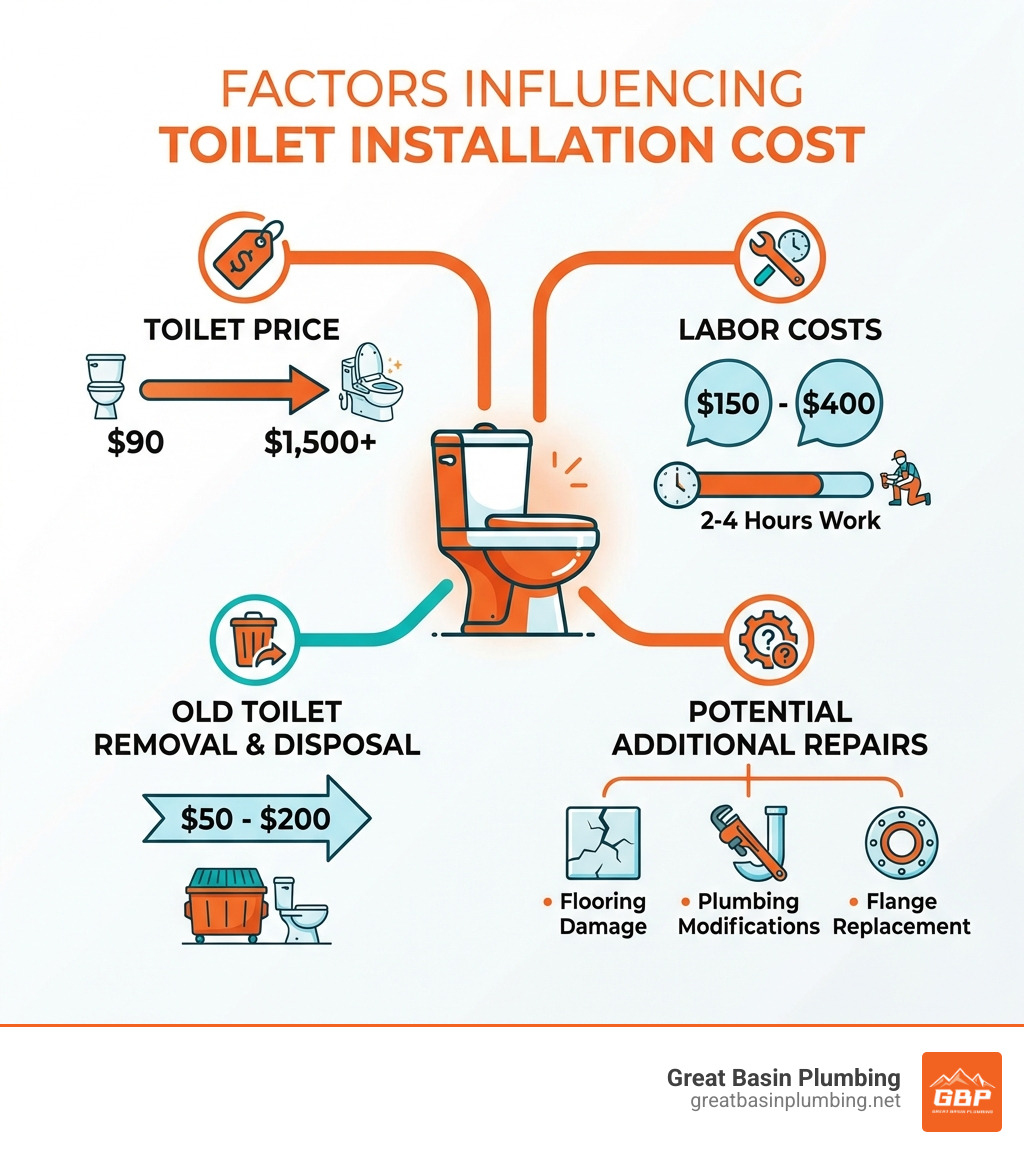
The average toilet install cost typically ranges from $224 to $532, with most homeowners paying around $372 for a standard replacement. This price includes both the toilet unit and professional labor, though your final cost can vary based on the type of toilet you choose, your location, and whether any additional plumbing work is needed.
Quick Cost Breakdown:
- National Average: $372
- Typical Range: $224-$532
- Labor Costs: $150-$400
- Toilet Unit: $90-$1,500+
- Old Toilet Removal: $50-$200 (sometimes included)
Whether you’re dealing with a cracked tank, constant leaks, or simply upgrading to a more efficient model, understanding what drives installation costs helps you budget appropriately and avoid surprises. The price you’ll pay depends on several factors: the type of toilet you select, how much your plumber charges, whether your bathroom needs any repairs, and if you’re installing in a tricky location like a basement or upper floor.
As Reese Mitchell, owner of Great Basin Plumbing, I’ve guided hundreds of homeowners through toilet installations and helped them understand the true average toilet install cost for their specific situation. Over the years, I’ve seen how proper planning and choosing the right plumber can save both money and headaches down the road.
What is the Average Toilet Install Cost?
When it comes to replacing or installing a new toilet, one of the first questions on every homeowner’s mind is, “How much will this set me back?” We understand that budgeting for home improvements can be tricky, especially when unexpected plumbing issues arise. Based on national averages, the average toilet install cost typically hovers around $372. However, it’s crucial to understand that this is just an average, and the typical range we see is anywhere from $224 to $532.
This cost encompasses a few key components. Primarily, it includes the price of the new toilet unit itself and the professional labor required for installation. The toilet unit can vary wildly in price, from budget-friendly models starting around $90 to high-end, feature-rich options that can exceed $1,500. Then there’s the labor, which covers the plumber’s time and expertise to remove your old toilet, prepare the area, install the new one, and ensure everything is functioning correctly and leak-free.
At Great Basin Plumbing, serving communities across Utah including Sandy, Brigham City, Ogden, and Salt Lake City, we pride ourselves on transparent, upfront pricing. We’ve compiled a table to give you a clearer picture of how the total estimated installation cost can vary depending on the type of toilet you choose, assuming a standard installation without major plumbing overhauls.
| Toilet Type | Average Unit Cost Range | Estimated Total Installation Cost (Unit + Labor) |
|---|---|---|
| Two-Piece Toilet | $89 – $413 | $239 – $713 |
| One-Piece Toilet | $169 – $1,138 | $319 – $1,438 |
| Wall-Hung Toilet | $216 – $5,175 | $366 – $5,475 |
| Smart Toilet | $1,199 – $6,750 | $1,349 – $7,050 |
Note: These estimates include an average labor cost of $150-$300 for a straightforward installation. Actual costs may vary based on specific toilet features, brand, and any unforeseen plumbing issues.
As you can see, the choice of toilet alone can significantly swing your final bill. But beyond the toilet itself, there are several other factors that play a starring role in determining your overall average toilet install cost. Let’s dive deeper into what influences these numbers.
Key Factors That Influence Your Final Price
Understanding the factors that influence your final toilet installation cost is essential for accurate budgeting. It’s rarely as simple as just the price tag on the toilet itself. From the complexity of the job to where you live in Utah, several elements can adjust the final figure.
One primary factor is the overall job complexity. A straightforward swap of an existing toilet for a similar model is usually the least expensive. However, if we encounter issues like a damaged subfloor, a corroded flange, or if you’re looking to relocate the toilet entirely, the complexity—and thus the cost—will naturally increase.
Another significant influencer is location. While we operate across Utah, serving areas from Orem to Park City, specific local labor rates can vary slightly. More importantly, the location within your home matters. Installing a toilet in a basement where new plumbing lines need to be run, for instance, is far more involved than replacing one on an existing upper floor. For any extensive plumbing needs beyond a simple swap, our team at Great Basin Plumbing is equipped to handle all your Utah Plumbing Services with expertise.
Finally, don’t forget the additional materials that go into every installation. While often small, these components are critical for a secure, leak-free setup. This includes a new wax ring for a watertight seal, a new supply line to connect water to the tank, and potentially a new flange if the existing one is damaged or improperly installed. These items are typically included in our installation quotes, but it’s always good to understand their purpose.
Breaking Down the Average Toilet Install Cost by Labor
The labor cost is a substantial portion of the average toilet install cost, and it’s where much of the variability lies. Plumbers typically charge either an hourly rate or a flat fee for toilet installations. Our research indicates that plumbers’ hourly rates can range from $65 to $125 on average, though some specialized or emergency services might command higher rates, sometimes up to $350 per hour.
We always aim for honest, upfront pricing, so you know what to expect. For a standard toilet replacement, the installation time usually ranges from 2 to 4 hours. This time frame accounts for disconnecting the old toilet, removing it, preparing the mounting surface, installing the new toilet, connecting the water supply, and testing for leaks.
However, several factors can increase labor time and, consequently, the cost. If the existing plumbing is old or corroded, if the floor beneath the toilet has water damage, or if the waste flange is cracked, our plumbers will need additional time for repairs. Emergency installations, especially outside of regular business hours, will also incur higher fees due to their urgent nature. We understand that plumbing emergencies don’t keep a schedule, which is why we offer 24/7 emergency services to our valued customers in Magna, Draper, and surrounding Utah communities.
How Toilet Type Affects the Average Toilet Install Cost
The type of toilet you choose is arguably the biggest determinant of the initial unit cost and can also influence the complexity of installation, affecting your overall average toilet install cost. Let’s explore the common types:
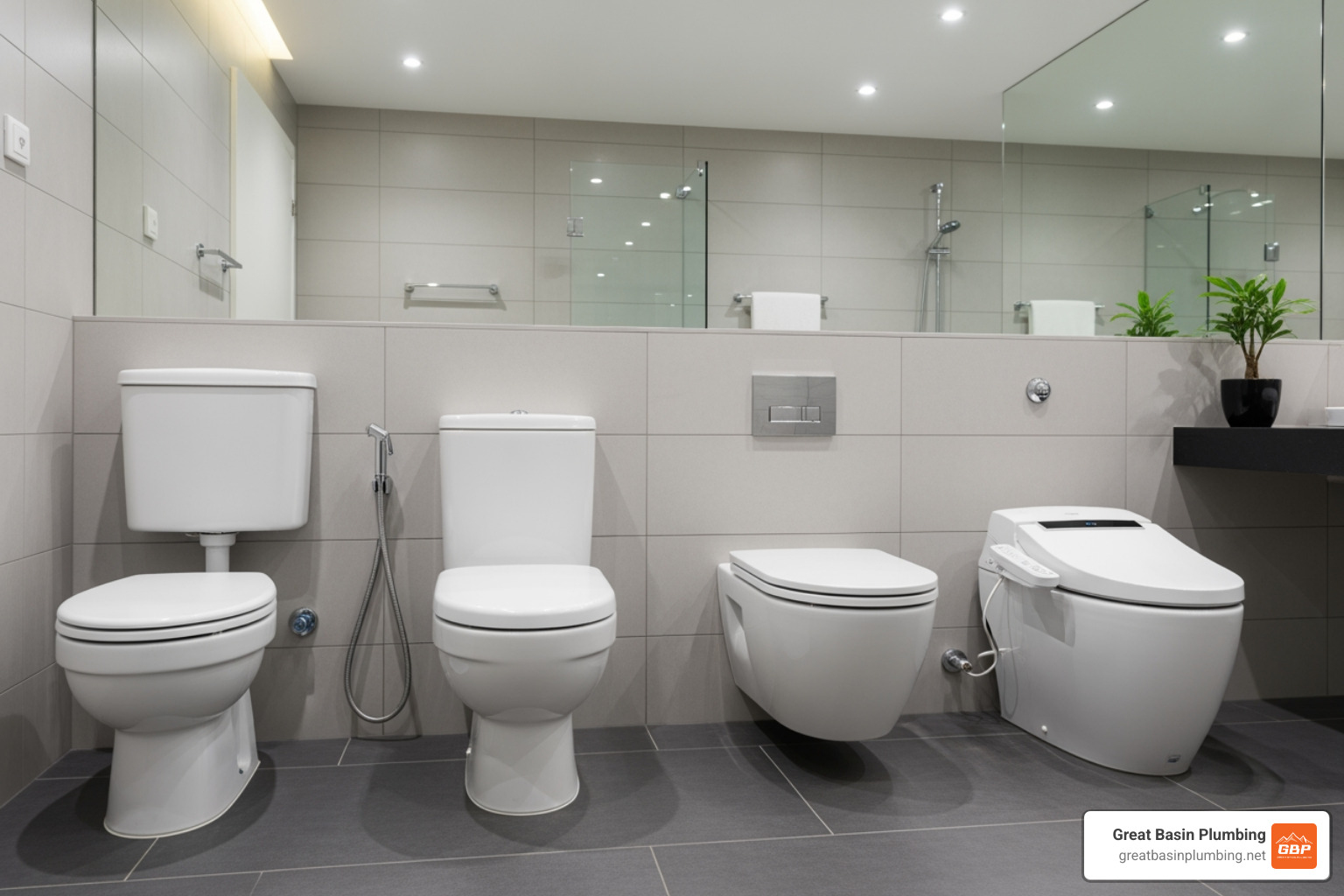
- Two-Piece Toilets: These are the most common and generally the most affordable. They consist of a separate tank and bowl that are bolted together during installation. Their average unit cost ranges from $89 to $413. They are usually straightforward to install, keeping labor costs lower.
- One-Piece Toilets: As the name suggests, the tank and bowl are integrated into a single unit. This design offers a sleek, modern look and is often easier to clean. While they are typically easier to install than two-piece models, they are heavier and more expensive to ship, with unit costs ranging from $169 to $1,138.
- Wall-Hung Toilets: These modern marvels save space and make floor cleaning a breeze, as they are mounted directly to the wall with the tank concealed inside. However, their installation is significantly more complex, requiring special in-wall carrier systems and access panels, which drives up both the unit cost ($216 to $5,175) and labor. Repairs can also be more challenging due to the hidden tank.
- Smart Toilets: Welcome to the future of bathrooms! Smart toilets boast features like heated seats, bidets, automatic flushing, nightlights, and even self-cleaning functions. These advanced features come with a premium price tag, ranging from $1,199 to $6,750, and their installation can be more intricate, sometimes requiring electrical connections.
- ADA-Compliant Toilets: While not a separate category in terms of design, ADA-compliant (Americans with Disabilities Act) toilets are designed for accessibility, typically featuring a taller “comfort height” bowl (17-19 inches from the floor). These are available in both one- and two-piece configurations and may be slightly more expensive than standard height models. We adhere to accessibility standards to ensure everyone can use our plumbing fixtures comfortably. You can learn more about these guidelines in the Guide to the ABA Accessibility Standards.
Each type offers a unique blend of aesthetics, functionality, and cost implications. We’ll help you choose the best fit for your needs and budget.
Hidden Costs: What Else Can Impact the Price?
While the toilet unit and basic labor form the core of the average toilet install cost, it’s the “hidden” or unexpected costs that can often catch homeowners off guard. We believe in full transparency, so let’s shed some light on these potential additions to your bill.
One common additional cost is old toilet removal and disposal. While some plumbers might include this in their overall quote, it’s frequently a separate line item. You can expect to pay anywhere from $50 to $200 for us to haul away and properly dispose of your old unit. It’s a small price to pay for not having to figure out how to get a porcelain fixture to the dump yourself!
More significant costs can arise from plumbing modifications. If your new toilet requires different rough-in dimensions, or if you’re looking to relocate the toilet within your bathroom, this will involve altering existing water and waste lines. Relocating a toilet entirely can be a substantial project, averaging around $3,000. This often means opening up walls or floors to reroute pipes, which then leads to other potential expenses.
Speaking of opening up walls and floors, flooring repairs and drywall damage are frequent culprits for unexpected costs. We often find water damage, rot, or mold under an old toilet once it’s removed, especially if there’s been a slow leak over time. Repairing or replacing damaged flooring can cost $8 to $24 per square foot, while drywall repair averages $50 to $100 per square foot. These repairs are crucial to prevent structural issues and ensure a clean, safe installation.
Finally, the installation location within your home can significantly impact the cost. Installing a toilet in a basement where no existing plumbing lines are present will require extensive rough-in plumbing work—running new fresh water and waste lines. The average price to install a toilet in a basement, including this new plumbing, is about $1,695. Installations on upper floors might also incur slightly higher costs due to the logistics of carrying heavy units upstairs and potential complexities with existing pipe configurations. When we provide an estimate, we factor in all these possibilities so you get the most accurate picture of your average toilet install cost.
Is It Time for a Replacement? 7 Signs to Watch For
Sometimes, deciding to replace a toilet isn’t just about aesthetics or an upgrade; it’s a necessity. We often advise our customers in Utah County, American Fork, and other service areas to keep an eye out for certain warning signs. Neglecting these signals can lead to more significant plumbing problems and higher repair bills down the line.
Beyond preventing disasters, upgrading to a newer, more efficient toilet offers significant benefits, primarily in water savings. Older toilets, especially those manufactured before 1994, can use a whopping 3.5 to 7 gallons of water per flush! Federal law now mandates that new residential toilets use no more than 1.6 gallons per flush, and many models today are “low-flow” or “ultra-low-flow,” using just 1.28 gallons or even less. The Environmental Protection Agency (EPA) highlights the benefits of these modern, efficient models. You can explore more about Efficient residential toilets from the EPA and how they can save you money and conserve water. By upgrading, the average family can save about $170 annually in water costs, which adds up to thousands over the lifetime of the toilet. That’s a lot of dough that stays in your pocket!
[LIST] of signs you need a new toilet:
- Constant Leaks or Running Water: If your toilet is constantly running or you see water pooling around the base, it’s a clear sign of trouble. While some leaks can be fixed with a new flapper or wax ring, persistent issues can indicate a crack in the tank or bowl, or a failing seal, warranting a full replacement.
- A Wobbly or Unstable Base: A toilet that rocks or wobbles when you sit on it isn’t just annoying; it’s a potential hazard. It could mean loose bolts, a deteriorated wax seal, or even damage to the subfloor underneath, possibly from a long-term leak. This is a problem we address promptly to prevent further structural damage.
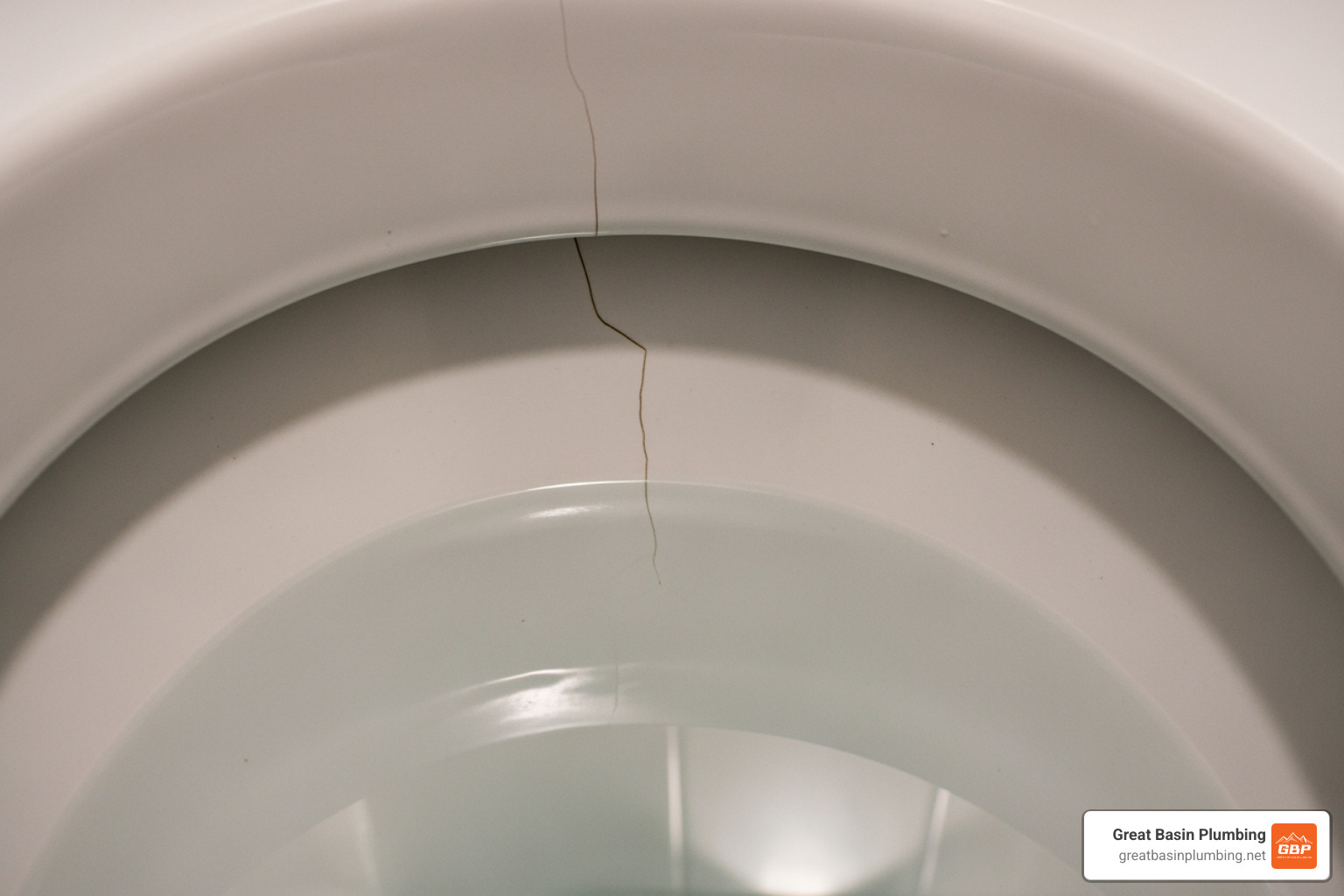
- Visible Cracks in the Bowl or Tank: Cracks, even hairline ones, in the porcelain can lead to leaks and eventually catastrophic failure. Once a toilet is cracked, it’s almost impossible to repair effectively, making replacement the safest and most practical option.
- Frequent Clogs or Poor Flushing: If you find yourself reaching for the plunger more often than not, or if your toilet struggles to clear waste with a single flush, its internal mechanisms might be worn out, or the design might simply be inefficient. This is a common complaint with older models that lack modern flushing technology.
- The Toilet is Over 25 Years Old: While some toilets can last up to 50 years, we generally recommend considering a replacement after 25 years. Not only will internal components likely be worn, but older toilets are significantly less water-efficient, costing you more on your utility bills.
- Rising Water Bills: A sudden unexplained spike in your water bill can often be traced back to a “silent leak” in your toilet. This is when water slowly seeps from the tank into the bowl without you noticing, constantly refilling the tank and wasting hundreds of gallons of water each month.
- Outdated Aesthetics: Sometimes, it’s simply about updating your bathroom’s look. An old, discolored, or awkwardly shaped toilet can detract from an otherwise beautiful bathroom. Upgrading can refresh the space and add value to your home.
If your toilet is exhibiting any of these signs, it might be time to call in the professionals at Great Basin Plumbing for an assessment. We’ll help you determine if a repair is feasible or if a new toilet installation is the smarter long-term solution.
DIY vs. Hiring a Professional Plumber
When faced with a toilet replacement, many homeowners consider the DIY route. It’s tempting to think about the potential cost savings on labor, especially for a seemingly straightforward task. For those with a good grasp of basic plumbing and the right tools, a DIY installation might be possible. However, it’s crucial to be aware of the inherent risks involved.
The biggest risk of a DIY toilet installation is water damage. An improper seal, a loose connection, or an incorrectly installed wax ring can lead to slow, insidious leaks that damage your subfloor, ceiling below, and even create mold issues. We’ve seen how a small oversight during installation can turn into thousands of dollars in repairs down the line. An improperly installed toilet can also wobble, become unstable, and cause further damage to the flange or drain pipe. When it comes to something as critical as water containment, precision is paramount. For any plumbing fixture installation, including toilets, faucets, or sinks, our team offers expert Fixture Services to ensure everything is installed correctly the first time.
Hiring a professional plumber, like our experienced team at Great Basin Plumbing, provides invaluable peace of mind. We bring the right tools, the expertise gained from countless installations, and the knowledge of local codes and best practices. Our professionals know how to handle unexpected issues, such as a corroded flange or a damaged floor, without creating new problems. Furthermore, professional installation often comes with a warranty on both the labor and sometimes even the parts, offering you protection should anything go wrong. While the upfront average toilet install cost might be higher with professional help, the long-term savings from avoiding costly repairs often make it the more economical choice.
Questions to Ask Before Hiring a Plumber
Before you commit to a plumber for your toilet installation, we strongly recommend asking a few key questions. This due diligence ensures you’re hiring a reputable professional and helps prevent any surprises regarding the average toilet install cost.
- Are you licensed and insured? This is non-negotiable. A licensed plumber has met the necessary qualifications, and insurance protects you from liability in case of accidents or damage during the job. We are fully licensed and insured across all our Utah service areas, from Pleasant View to South Jordan.
- Can you provide a written estimate? Always get a detailed, written estimate that breaks down the costs for the toilet unit (if purchased through them), labor, and any additional materials or services like old toilet removal. This helps you compare quotes accurately.
- How do you charge for labor (hourly vs. flat fee)? Some plumbers charge an hourly rate, while others offer a flat fee for specific jobs. Understand their billing structure to anticipate the total labor cost.
- What are your payment terms? Clarify if a deposit is required upfront, when the final payment is due, and what payment methods are accepted.
- What services are included in the estimate? Ensure that the estimate clearly states what’s covered, such as removal of the old toilet, installation of the new one, and any basic parts like a wax ring or supply line.
- Is cleanup included? You don’t want to be left with a mess after the installation. Confirm that the plumber will clean up the work area and dispose of all debris.
- Do you offer a warranty on your work? A reputable plumber should stand behind their work. Ask about any guarantees or warranties on the installation.
Asking these questions upfront will help you find a trustworthy plumber and ensure a smooth, worry-free toilet installation experience.
Frequently Asked Questions about Toilet Installation
We get a lot of questions from homeowners about toilet installation, and we’re always happy to provide clear answers. Here are some of the most common inquiries we receive about the average toilet install cost and the process.
How can I save money on my toilet installation?
We understand that everyone wants to get the best value for their money. Here are some smart strategies we recommend to potentially lower your average toilet install cost:
- Get Multiple Quotes: Don’t settle for the first estimate you receive. Contact at least three reputable plumbers in your area (like us!) to compare pricing and services. This gives you leverage and ensures you’re getting a fair market rate. Feel free to reach out to us at Great Basin Plumbing for a transparent quote via our Contact page.
- Choose a Standard Model: While smart toilets and wall-hung units offer impressive features, they come with a higher price tag for both the unit and installation. Opting for a standard two-piece or one-piece toilet will significantly reduce your overall cost.
- Bundle Plumbing Jobs: If you have other plumbing repairs or installations needed, consider having them done at the same time. Plumbers often offer a discount on labor when they can tackle multiple tasks in one visit, saving you money on call-out fees and travel time.
- Purchase the Toilet Yourself: Sometimes, buying the toilet from a home improvement store or online retailer yourself can save you money compared to purchasing it through your plumber. Just be sure to verify the plumber is comfortable installing a client-supplied unit and that it meets all necessary specifications.
How long does a typical toilet installation take?
For a standard toilet replacement where the new toilet fits the existing plumbing and there are no unforeseen issues, the installation usually takes our experienced plumbers about 2 to 4 hours. This includes removing the old unit, preparing the area, installing the new toilet, connecting the water supply, and testing for leaks.
However, if the installation involves complex scenarios, such as rough-in plumbing for a new location, repairing subfloor damage, or relocating drain lines, the duration can extend significantly. These more involved projects might take anywhere from a half-day to a full day, or even longer if extensive renovations are required. We’ll always provide you with an estimated timeline after assessing your specific situation.
Does removing an old toilet cost extra?
This is a common question, and the answer can vary. In many cases, the cost of removing and disposing of your old toilet is included in the overall installation quote from your plumber. This is often the case for a straightforward replacement.
However, some plumbers might list it as a separate fee, typically ranging from $50 to $200. This fee covers the labor to disconnect and remove the heavy, often messy, old toilet, as well as the cost of transporting it to a proper disposal facility. It’s always best to ask your plumber explicitly whether old toilet removal and disposal are part of their quoted average toilet install cost or if it will be an additional charge. We believe in clear communication, so you’ll know exactly what’s included in our service.
Your Next Steps for a Flawless Installation
Navigating home improvements, even for something as seemingly simple as a toilet replacement, can be filled with questions about costs, processes, and potential pitfalls. We’ve explored the average toilet install cost, delving into the numerous factors that can influence your final price, from the type of toilet you choose to unexpected plumbing issues and labor rates. We’ve also highlighted the critical signs that indicate it’s time for a replacement and the significant benefits of upgrading to a more water-efficient model.
While the allure of DIY might be strong for some, we firmly believe in the importance of professional work when it comes to plumbing. An improperly installed toilet can lead to costly water damage, frustrating leaks, and ongoing performance issues that far outweigh any initial savings on labor. For a proper, leak-free, and lasting installation, entrusting the job to experienced professionals is always the wisest choice.
At Great Basin Plumbing, we bring our local expertise and commitment to customer satisfaction to every job. Whether you’re in Sandy, Brigham City, Ogden, Orem, Draper, American Fork, Salt Lake City, South Jordan, Magna, Park City, or Heber, our team is ready to provide you with honest advice and skilled service. We understand the specific plumbing needs and challenges unique to our Utah communities.
Don’t let a faulty toilet flush your peace of mind down the drain. If you’re considering a new toilet installation or need expert advice on any plumbing fixture, we’re here to help. Our goal is to ensure your plumbing systems are efficient, reliable, and installed to the highest standards. For more information on our comprehensive services, including toilet installation, please visit our Utah Plumbing Fixture Services page. Let us handle the dirty work so you can enjoy a perfectly functioning bathroom.