
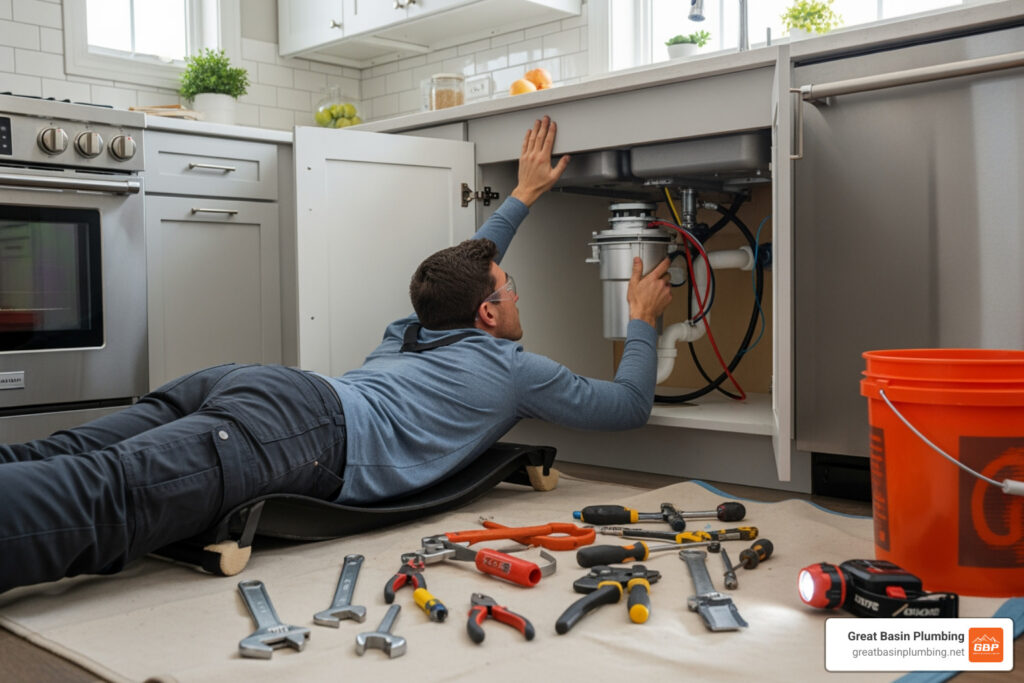
Why a Properly Installed Garbage Disposal Matters
A garbage disposal installation can transform your kitchen cleanup, but a faulty setup can lead to leaks and frustration. Understanding the process helps you decide between a DIY project and calling a professional.
Quick Answer: Garbage Disposal Installation Overview
- Turn off power at the circuit breaker.
- Remove old unit by disconnecting plumbing and electrical.
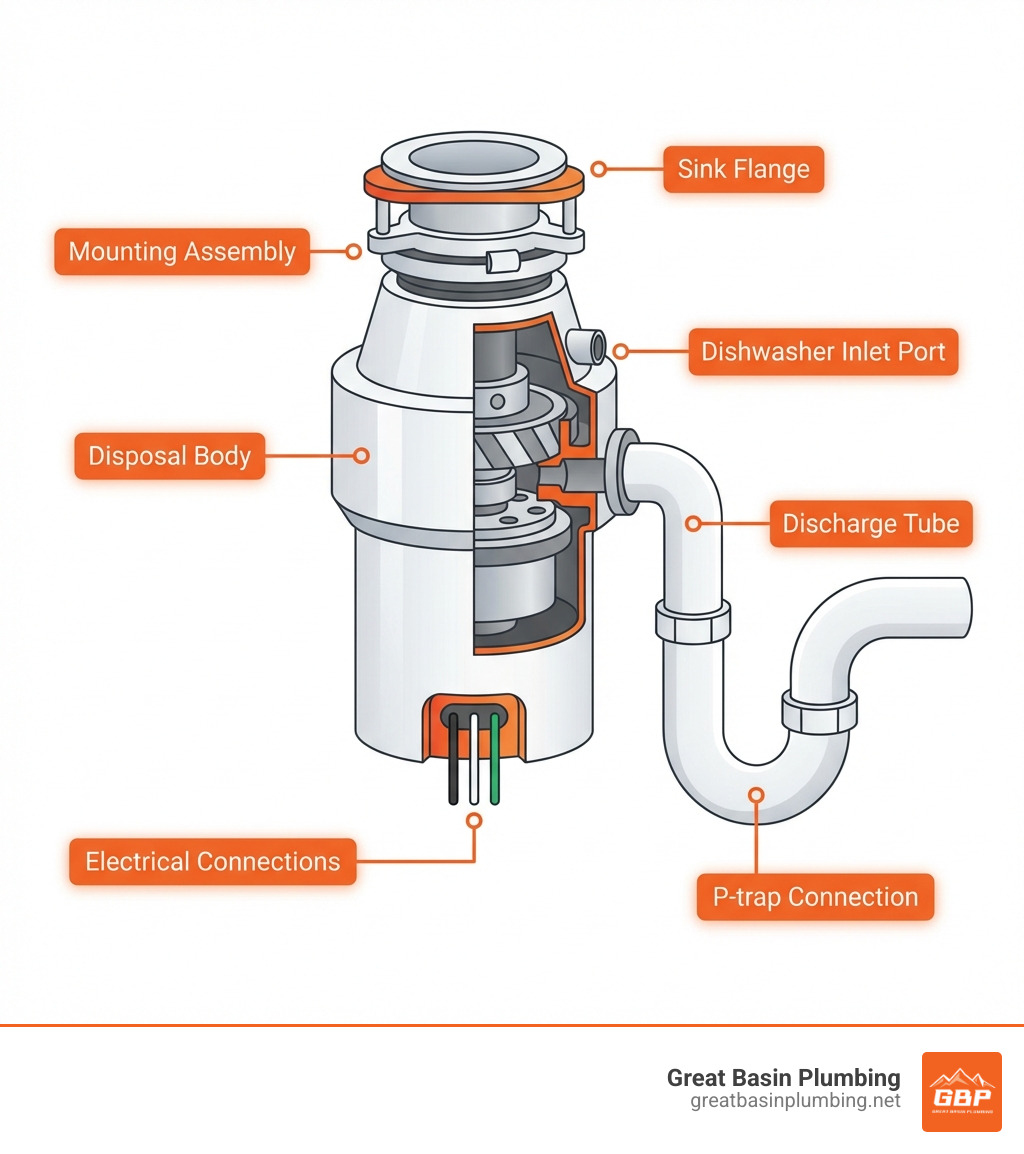
- Install new sink flange with plumber’s putty for a watertight seal.
- Wire the disposal by matching color-coded wires.
- Mount the unit to the sink’s mounting assembly.
- Connect plumbing, including the discharge tube and P-trap.
- Test for leaks and proper operation.
Typical timeframe: 1-3 hours for DIY | Difficulty: Beginner to Intermediate | Cost: $80-$250 DIY or $400-$1,000 professional
Most homeowners can handle this project, but mistakes with electrical or plumbing seals can cause water damage or electrical hazards. The process involves both plumbing and electrical work, but modern disposals are designed for easier installation. Since most units last 10-15 years, getting it right the first time is key.
I’m Reese Mitchell, owner of Great Basin Plumbing, and I’ve completed hundreds of garbage disposal installations across Utah. Whether you do it yourself or call a pro, understanding the proper process ensures reliable results.
Before You Begin: Choosing Your Disposal and Gathering Supplies
Before starting your garbage disposal installation, make sure you have the right unit and all necessary supplies. Proper preparation is key.
Choosing the Right Garbage Disposal
Understanding the different types of garbage disposals will help you choose the best one for your home.
- Continuous Feed Disposals: The most common type, operated by a wall switch. They run continuously, are affordable, and convenient for large amounts of waste, but can be noisier.
- Batch Feed Disposals: Activated by a special stopper, these units only run when the stopper is in place, making them safer. They are often quieter but more expensive.
Horsepower (HP) is another crucial factor, with models ranging from 1/3 HP to over 1 HP.
- 1/3 HP to 1/2 HP: Good for smaller households with light use and soft food scraps.
- 3/4 HP to 1 HP (or 1 1/4 HP): Ideal for larger families and tougher food waste like small bones. A 3/4 HP unit offers a great balance of power, reducing the chance of jams.
If you have a septic system, choose a septic-safe model designed to break down waste into finer particles. Always check the manufacturer’s specifications.
Here’s a quick comparison:
| Feature | Continuous Feed Disposal | Batch Feed Disposal |
|---|---|---|
| Activation | Wall switch; runs continuously | Stopper activated; runs only when stopper is in place |
| Convenience | Easy for continuous feeding | Safer (no accidental drops) |
| Safety | Requires caution with hands and foreign objects | Higher safety due to stopper activation |
| Noise Level | Generally louder | Generally quieter |
| Cost | More affordable | Higher price point |
| Typical Use | Everyday use, larger volumes of soft food waste | Households prioritizing safety, quieter operation |
Essential Tools and Materials for Installation
Gathering your tools and materials beforehand will make the installation process much smoother.
Tools We’ll Need:
- Screwdriver Set: Flathead and Phillips head.
- Adjustable Pliers / Channel-Lock Pliers: For pipes and nuts.
- Pipe Wrench: For stubborn pipe connections.
- Hammer: For the dishwasher plug.
- Putty Knife: To scrape old putty.
- Bucket and Towels: To catch water and drips.
- Wrenchette: Often included with new disposals for mounting.
- Safety Glasses: Essential eye protection.
- Flashlight or Headlamp: For visibility under the sink.
- Wire Cutters/Strippers: For electrical wires.
Materials We’ll Need:
- New Garbage Disposal Unit
- Plumber’s Putty: For a watertight seal.
- Wire Nuts: For electrical connections.
- Power Cord Kit (Optional): If your disposal is hardwired and you want to convert it to a plug-in, a power cord kit may be needed.
- Dishwasher Drain Connector Kit (Optional)
- PVC Pipe Cement and Primer (Optional): If you need to modify drain pipes.
- Hacksaw or PVC Pipe Cutter (Optional): For cutting drain pipes.
Safety First: Critical Precautions for Your Project
Working with plumbing and electricity requires careful safety precautions. Before you begin, take these essential steps.
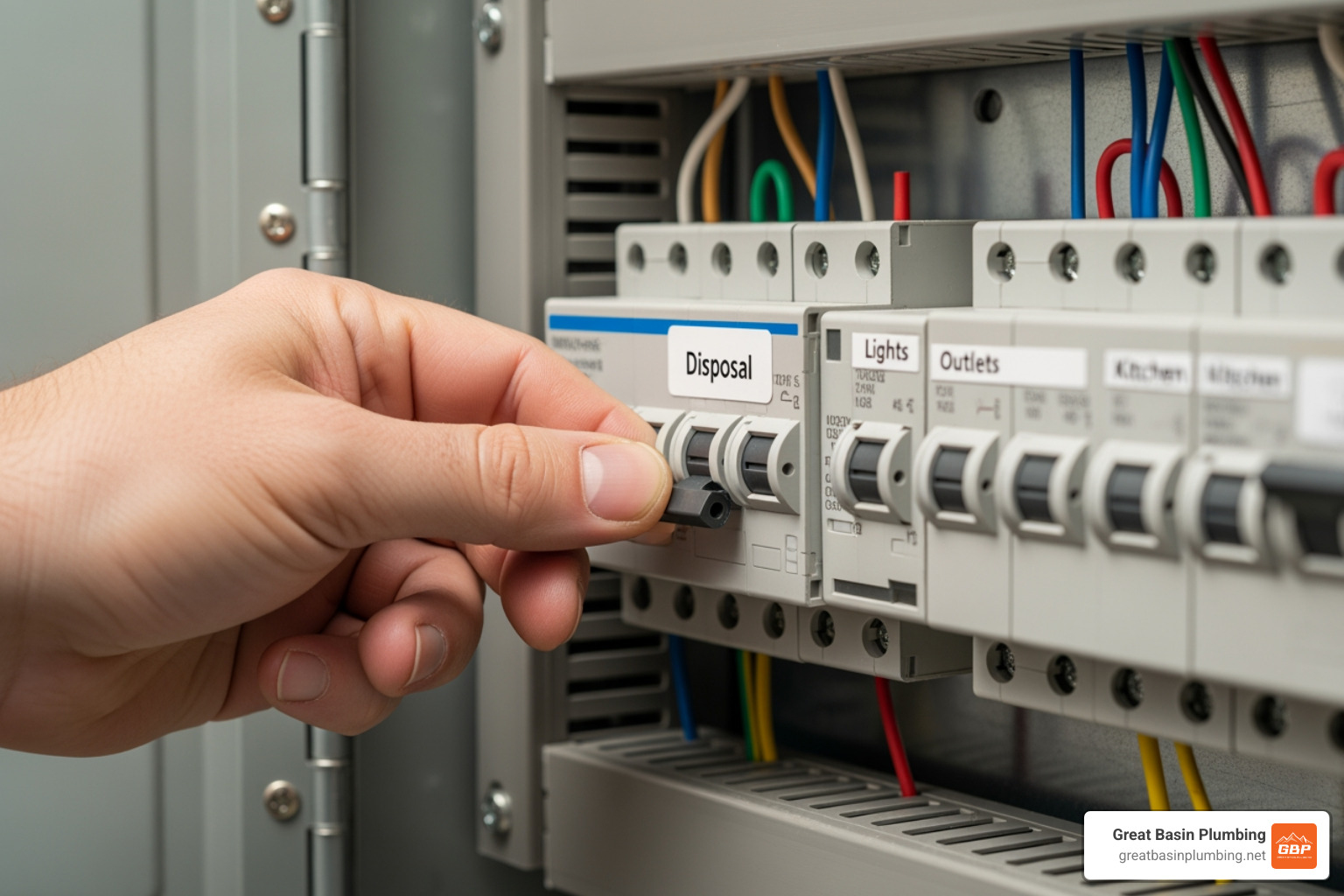
The most important rule is to turn off the power to the garbage disposal. Go to your home’s main electrical panel, find the circuit breaker for the kitchen or disposal, and flip it to the “off” position.
After flipping the breaker, test the wall switch for the disposal to confirm the power is off. The unit should be completely silent. If it makes any noise, you have the wrong breaker; go back and try again.
For electrical safety, always ensure proper grounding. The green or bare copper wire must connect to the green ground screw on the disposal. Never ground an electrical wire to a gas line. A dedicated, switch-controlled outlet is recommended. Be aware that you may need a different power cord or adapter depending on your home’s outlets.
For plumbing safety, shut off the water supply to the sink using the valves underneath. Turn both the hot and cold water valves clockwise until snug. Have a bucket and towels ready to catch residual water from the drain lines.
Finally, always wear safety glasses during the garbage disposal installation to protect your eyes from water and debris.
The Step-by-Step Garbage Disposal Installation Process
These steps will guide you through the garbage disposal installation process, whether you’re replacing an old unit or installing a new one.
Step 1: Removing the Old Unit
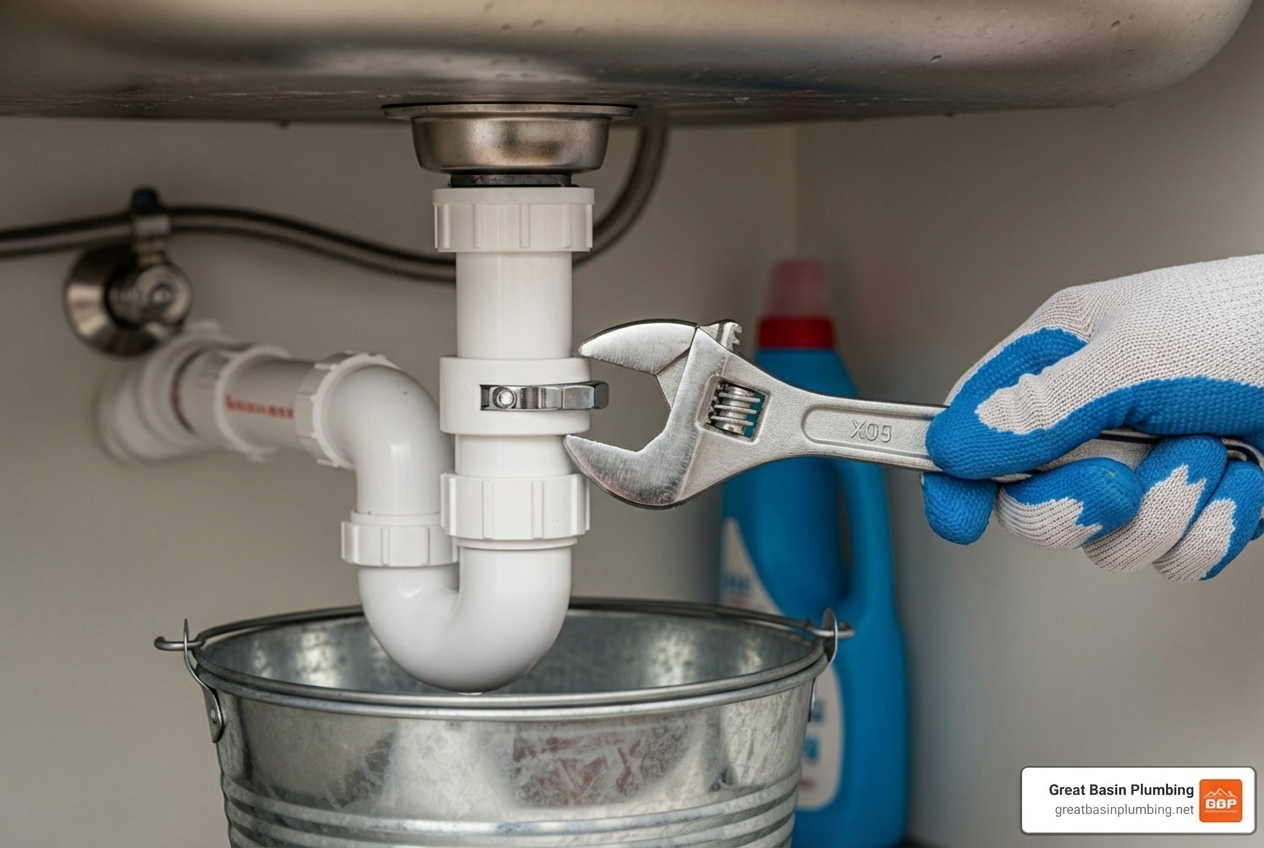
- Place bucket and towels: Position a bucket under the P-trap and lay towels down to catch any spills.
- Disconnect P-trap: Use pliers to loosen the slip nuts on the P-trap (the U-shaped pipe) and remove it, draining any water into the bucket.
- Disconnect dishwasher hose: If a dishwasher is connected, loosen the hose clamp and pull the drain hose free from the disposal’s inlet.
- Support disposal weight: Disposals are heavy. Support the unit with a block or have a helper ready before disconnecting it.
- Open up mounting ring: Use a wrenchette or large screwdriver to turn the cam collar on the mounting ring counter-clockwise until the disposal detaches.
- Lower the unit: Carefully lower the old disposal.
- Disconnect electrical: Turn the old disposal over and remove the electrical cover plate. Untwist the wire nuts to separate the disposal’s wires from the house wiring and remove the electrical cable.
Step 2: Preparing the Sink and Mounting the New Flange
- Remove old mounting assembly: From under the sink, remove the old mounting rings and nut. Lift the old sink flange out from above.
- Scrape old putty: Use a putty knife to scrape all old plumber’s putty from the sink drain opening and clean the surface.
- Apply new plumber’s putty: Roll a 1/2-inch thick rope of fresh plumber’s putty and apply it to the underside of the new sink flange.
- Press new flange into drain: Insert the new flange into the drain opening from above and press down firmly to create a seal.
- Install gasket, backup flange, and mounting ring: From underneath, slide the fiber gasket, metal backup flange, and mounting ring onto the sink flange.
- Tighten screws evenly: Install the snap ring. Tighten the three mounting screws evenly until plumber’s putty oozes out from under the flange, then wipe away the excess.
Step 3: Wiring and Prepping the New Disposal
- Hardwired vs. corded: If your new disposal is corded, you can skip the wiring steps. For hardwired units, follow the steps below.
- Connect wires safely: Remove the electrical cover plate on the new disposal. Run the electrical cable through the connector and connect the wires by matching colors: white to white, black to black, and the green (or bare copper) wire to the green ground screw. Secure with wire nuts. For a visual guide, you can learn how to connect wires safely. Replace the cover plate.
- Dishwasher knockout plug: If connecting a dishwasher, use a screwdriver and hammer to tap out the knockout plug from the dishwasher inlet port. Retrieve the plug from inside the grinding chamber.
Step 4: Mounting the Unit and Connecting Plumbing
- Lift disposal to mount: Lift the new disposal, aligning its mounting tabs with the slots on the mounting ring.
- Align and lock: Push the disposal up and turn the lower ring clockwise until it clicks and locks into place.
- Tighten with wrenchette: Use the wrenchette to turn the ring further until the disposal is secure.
- Connect discharge tube: Attach the discharge elbow to the disposal’s outlet with the provided flange and bolts. You may need to cut or extend existing pipes to fit.
- Connect P-trap: Reconnect the P-trap to the discharge tube and wall drain. Hand-tighten the slip nuts, then give them a quarter-turn with pliers.
- Reconnect dishwasher hose: If applicable, slide the dishwasher drain hose onto the inlet port and secure it with the hose clamp.
For complex drain issues or pipe modifications, our team at Great Basin Plumbing offers comprehensive drain services across Utah.
Final Checks, Common Issues, and Maintenance
A successful garbage disposal installation isn’t complete without testing it and knowing how to maintain it.
Testing Your New Garbage Disposal Installation
Check for leaks and ensure proper operation before you’re done.
- Initial Leak Check: Double-check that all plumbing connections are snug.
- Sink Flange Seal Test: Plug the sink and fill it with an inch of water. Let it sit and inspect under the sink for drips around the flange. If you see any, tighten the mounting screws.
- Restore Power: Go to the electrical panel and flip the circuit breaker back on.
- Run Water and Test: Turn on the cold water, then flip the disposal switch. It should run smoothly. While it’s running, check all pipe connections again for leaks. If you spot one, turn everything off and tighten the connection.
Troubleshooting Common Installation Challenges
Here are solutions to common issues:
- Leaks from the flange: This is usually due to uneven tightening or not enough plumber’s putty. You may need to loosen the mounting ring, re-apply putty, and retighten the screws evenly.
- Leaks from pipe connections: Tighten the slip nuts. If that fails, the pipe may be misaligned or the washer may need replacing.
- Disposal won’t start: Press the reset button on the bottom of the unit. If that doesn’t work, check the circuit breaker.
- Humming but not grinding: The flywheel is likely jammed. Turn off power! Use a flashlight to look for and remove any foreign objects. If you see nothing, insert the wrenchette into the hole on the bottom of the unit and turn it back and forth to free the jam. Press the reset button and try again.
If you face persistent issues, our team at Great Basin Plumbing is ready to help with plumbing fixture services throughout Utah.
Essential Maintenance for a Long-Lasting Disposal
A garbage disposal can last 10-15 years with proper care. Here are our top maintenance tips:
- Use cold water: Run cold water during and for 15-30 seconds after grinding to flush waste and cool the motor.
- Grind ice cubes: Regularly grinding ice cubes helps clean the grinding components.
- Grind citrus peels: Occasionally grind lemon or orange peels to deodorize the unit.
- Avoid grease and oil: Never pour grease or oil down the drain, as they cause clogs.
- Avoid coffee grounds: They can accumulate and create sludge in your pipes.
- Avoid stringy vegetables: Fibrous foods like celery and corn husks can wrap around the blades and cause jams.
- Avoid hard items: Don’t grind fruit pits, bones, or shells, which can damage the unit.
- Don’t overload: Feed waste in small batches.
- Turn it on daily: Briefly run the disposal with cold water each day to prevent rust and keep parts moving.
DIY vs. Professional: What’s the Cost?
Deciding between a DIY garbage disposal installation and hiring a pro often comes down to cost, time, and comfort level.
The Cost of DIY Garbage Disposal Installation
A DIY installation can save you money.
- Unit Cost: The main expense is the disposal itself. A 1/3 HP unit can be under $100, while a 1/2 to 3/4-horsepower unit typically costs $150 to $200.
- Material Costs: Expect to spend $10-$30 on plumber’s putty, wire nuts, and other small items.
- Time Commitment: A DIY replacement usually takes 1-3 hours.
The total cost for a DIY installation is typically between $80 and $250, not including tools.
The Cost of Professional Installation
Calling a licensed plumber is the best choice if you’re short on time, uncomfortable with the work, or facing a complex setup.
- Plumber Labor Cost: Professional installation labor can range from $400 to $1,000 in Utah, depending on the job’s complexity. A plumber can often complete the work in about an hour.
- Total Project Cost: The total cost will be the labor plus the cost of the unit, whether you or the plumber provides it.
- Benefits of a Pro:
- Speed and efficiency: A pro can do the job quickly.
- Guaranteed work: Licensed plumbers offer a labor warranty for peace of mind.
- Code compliance: Professionals ensure the work meets all local electrical and plumbing codes.
- Expertise: They can handle any unexpected issues that arise.
- When to call a pro: You should call a professional if:
- You’re installing a disposal for the first time and new wiring is needed.
- You’re uncomfortable with electrical or plumbing work.
- You run into problems you can’t solve during a DIY attempt.
While the upfront cost is higher, the peace of mind and guarantee of a job done right are often worth the investment.
Conclusion: Enjoy Your New Kitchen Convenience
We’ve covered the entire garbage disposal installation process, from choosing a unit to testing the final connections. Whether you chose the DIY route or professional help, the result is a more convenient kitchen.
A well-maintained garbage disposal is a kitchen workhorse that reduces odors and simplifies cleanup. It’s a small luxury that makes daily chores easier.
For expert, safe, and fast installation in Utah, trust the licensed plumbers at Great Basin Plumbing. As a local, family-owned company, we provide top-notch garbage disposal installation in Sandy, Ogden, Orem, Salt Lake City, and beyond. We offer honest, upfront pricing and guarantee your satisfaction.
Don’t let a faulty disposal disrupt your day. Contact us for your Utah plumbing fixture needs today, and let us help you keep your kitchen running smoothly!