
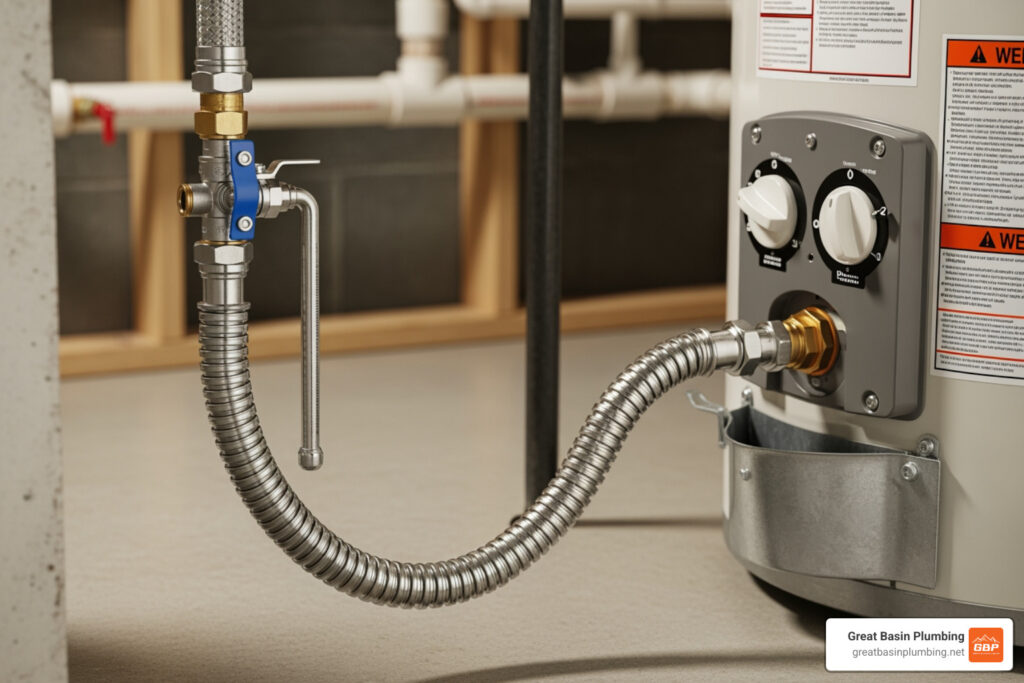
Why Flexible Gas Lines Matter for Your Water Heater
A flexible gas line for hot water heater installations is a corrugated stainless steel connector that safely delivers natural gas or propane from your home’s gas supply to your water heater. Here’s what you need to know:
Key Facts About Flexible Gas Lines:
- What they are: Durable, flexible stainless steel connectors (typically 1/2″ to 1″ diameter, 12″ to 48″ length)
- Lifespan: Approximately 30 years for CSST (Corrugated Stainless Steel Tubing)
- Compatibility: Work with both natural gas and propane water heaters
- Cost: $2-$4 per foot for materials, with total installation ranging from $120 to $1,350
- Safety: Must be CSA-certified and installed according to ANSI standards and local building codes
- Installation: Should include proper bonding, leak testing, and a dedicated shut-off valve
These flexible lines have largely replaced rigid black steel pipes in modern homes because they’re easier to install, resist corrosion, absorb vibration, and provide safer connections in seismic areas.
I’m Reese Mitchell, owner of Great Basin Plumbing, and I’ve installed and repaired countless flexible gas lines for hot water heaters throughout Utah. After years of ensuring safe, code-compliant gas connections for homeowners and businesses, I’ve seen how critical proper installation is to protecting your family and property.
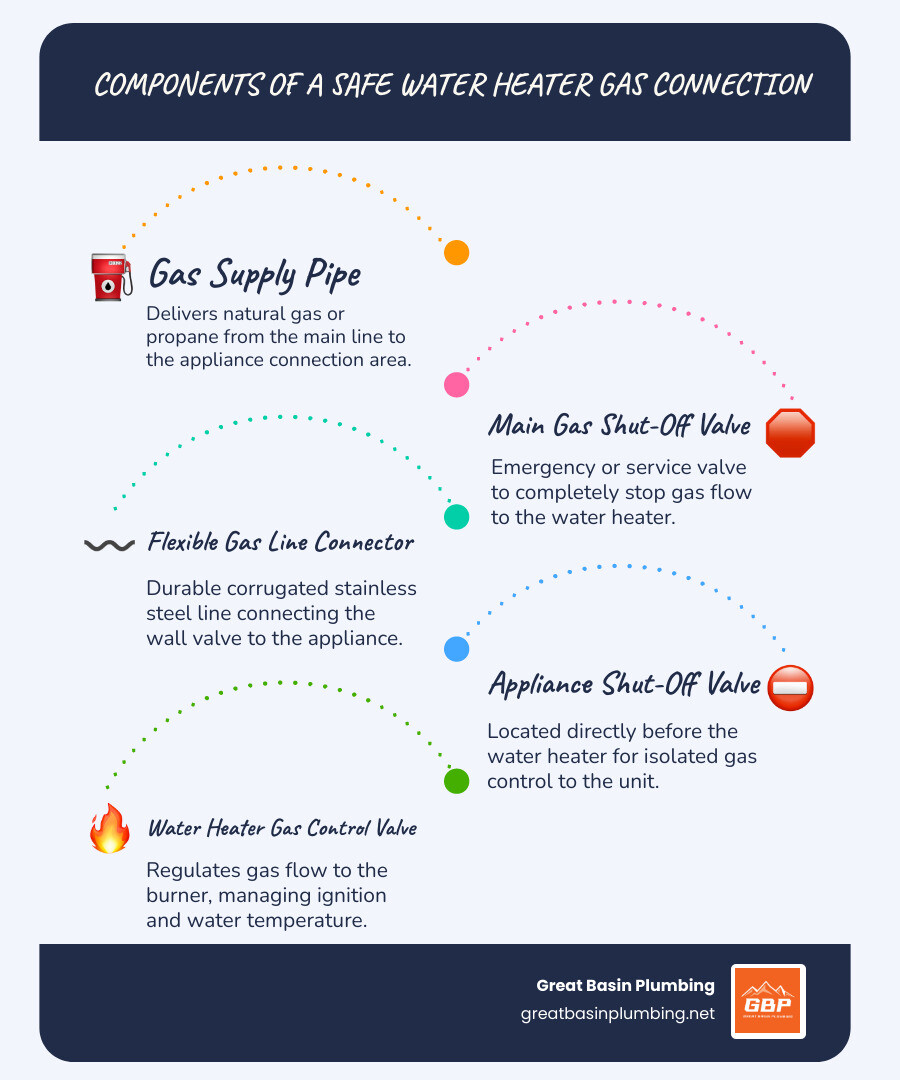
Why Choose a Flexible Gas Line for Your Water Heater?
When it comes to connecting your water heater to the gas supply, the choice between traditional rigid piping and a flexible gas line for hot water heater can significantly impact ease of installation, safety, and longevity. For us at Great Basin Plumbing, we’ve seen a clear shift towards flexible gas lines in modern plumbing, and for good reason! They offer a host of advantages that make them a superior choice for many Utah homeowners.
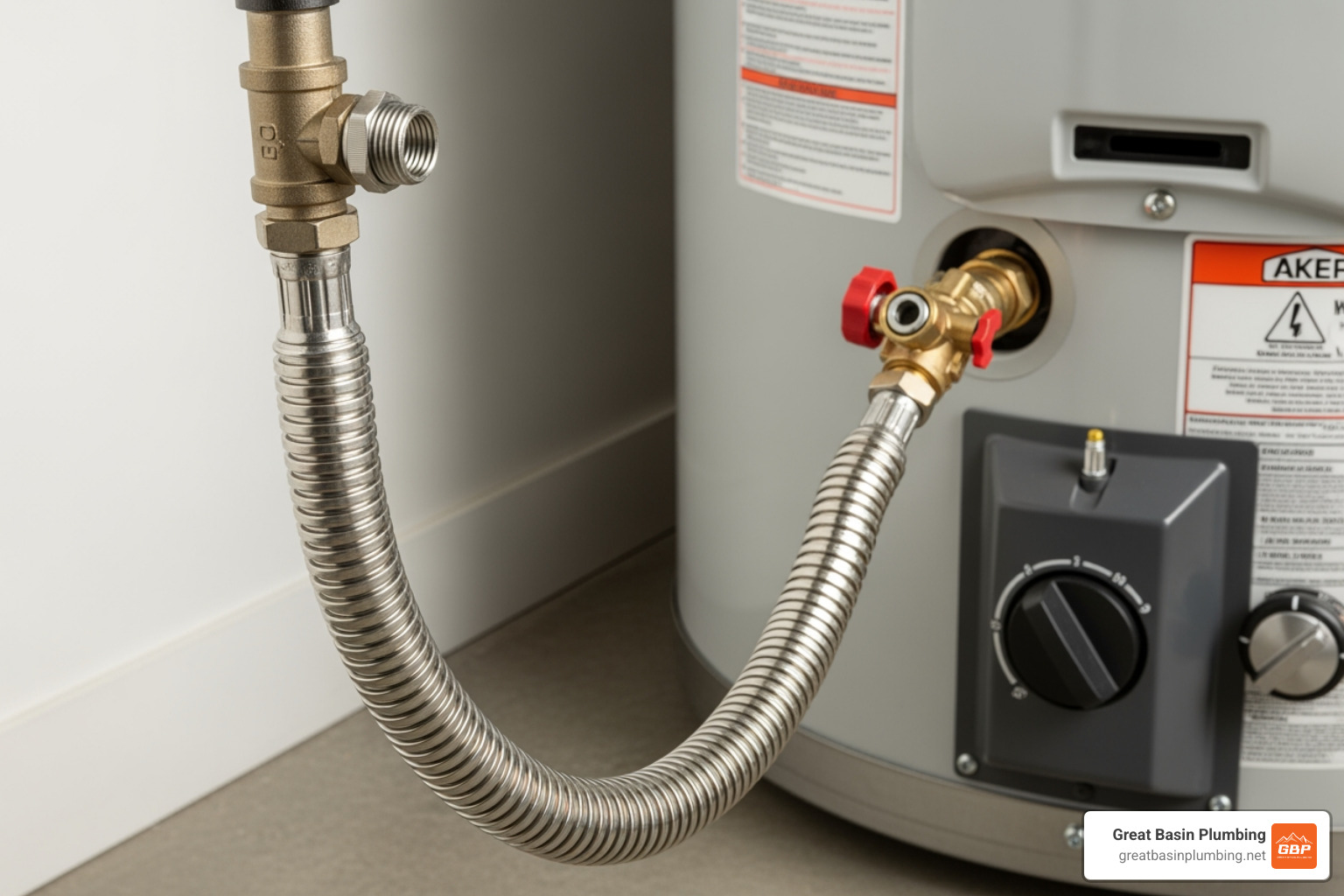
One of the most obvious benefits is their inherent flexibility. Unlike rigid black steel pipes that require precise measurements, cuts, and threaded connections, flexible gas lines can bend and snake into tight spaces. This makes installation quicker and often less disruptive, especially when dealing with existing plumbing configurations or when replacing an old water heater with a new model that might have slightly different connection points. This flexibility doesn’t just make our job easier; it means less labor time for you, potentially saving on installation costs.
Another crucial advantage, particularly for us here in Utah, is their ability to absorb vibration. Appliances like water heaters, especially as they cycle on and off, can create subtle vibrations. Rigid pipes transmit these vibrations, which over time can stress connections and potentially lead to leaks. A flexible gas line acts as a shock absorber, minimizing the transfer of these vibrations and thereby reducing wear and tear on the connections. This contributes to a more secure and long-lasting installation.
Speaking of security, flexible gas lines offer improved seismic area safety. Utah, like many regions, is prone to seismic activity. In the event of an earthquake, rigid gas lines can be brittle and prone to breaking or cracking, leading to dangerous gas leaks. The inherent flexibility of corrugated stainless steel tubing (CSST) allows it to withstand some movement and shifting without fracturing, providing a much safer connection in earthquake-prone areas. This peace of mind is invaluable for homeowners across Salt Lake City, Ogden, Orem, and beyond.
Furthermore, these lines boast excellent corrosion resistance. Traditional black steel pipes are susceptible to rust and corrosion, especially in damp environments like basements or utility closets where water heaters often reside. The stainless steel construction of flexible gas lines means they won’t rust, ensuring the integrity of your gas supply over their impressive lifespan. This is a significant improvement in terms of long-term safety and maintenance.
Flexible gas lines are a game-changer for modern plumbing. They streamline installations, improve safety, and offer greater durability compared to their rigid predecessors. When we install or service your water heater, we prioritize these benefits to ensure your home’s gas connections are as safe and efficient as possible.
Learn more about our Utah Plumbing Services.
Understanding Flexible Gas Line Options: Types, Sizing, and Lifespan
Navigating gas lines can feel a bit daunting, but understanding the different types of flexible gas lines, how to size them, and their expected lifespan is crucial for a safe and efficient water heater connection. We’re here to explain it for you.
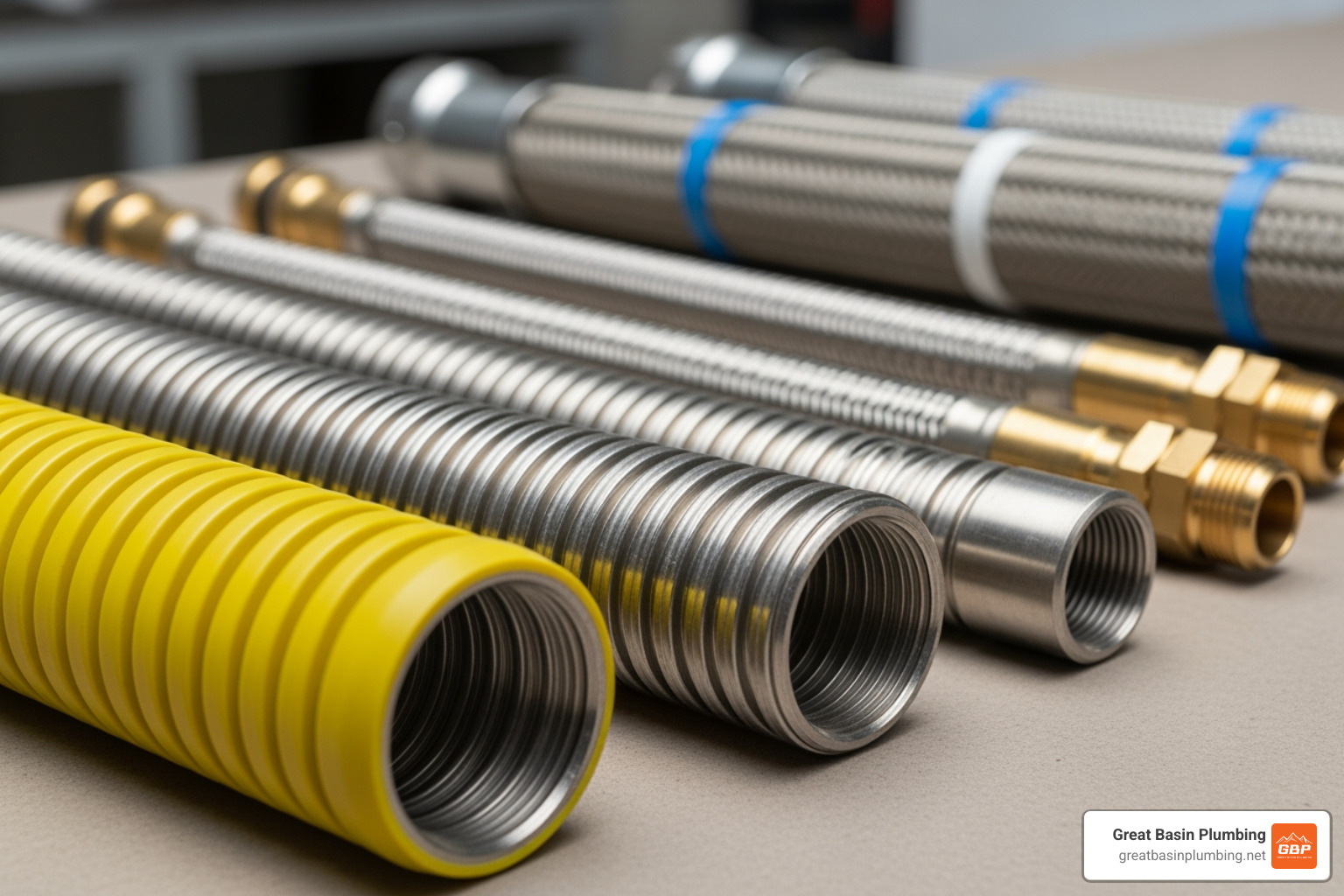
The most common type of flexible gas line you’ll encounter for water heaters is Corrugated Stainless Steel Tubing (CSST). This material is widely used due to its excellent flexibility, durability, and corrosion resistance. You’ll often see it with a yellow or black coating, which provides an extra layer of protection and makes it easily identifiable as a gas line. While flexible copper tubing and polyethylene pipes exist, CSST is the go-to for connecting appliances like your water heater within your home. Polyethylene, for instance, is typically preferred for exterior underground gas installations because of its non-corrosive nature in soil. For your water heater, we’re almost always talking about CSST or similar stainless steel connectors.
These stainless steel connectors are engineered for high performance. For example, a PLUMBFLEX 30-inch yellow-coated stainless steel flexible gas connector, with a 1/2 inch O.D. and 3/8 inch fittings, is rated for a substantial 77,100 BTU capacity. This demonstrates the robust engineering behind these seemingly simple components. They’re designed to handle the demands of your water heater safely and effectively.
Choosing the Correct Size and Type
Selecting the right size and type of flexible gas line for hot water heater is paramount. It’s not a one-size-fits-all situation, and getting it wrong can lead to inefficient operation or, worse, safety hazards. We always emphasize matching the gas line to your appliance’s specific needs.
First, you’ll need to consider the diameter. Flexible gas lines typically range from 1/2 inch to 1 inch in diameter. The internal diameter (ID) and outer diameter (OD) are important, as are the fitting sizes. For instance, a 1/2 inch O.D. line might have 3/8 inch fittings. The correct diameter ensures adequate gas flow to your water heater. If the line is too small, your water heater won’t receive enough gas, leading to reduced performance and potential operational issues.
Next is the length. Flexible gas connectors commonly come in lengths from 12 inches to 48 inches. While it might be tempting to get a longer line for more flexibility, it’s crucial to select the shortest possible length that allows for proper connection without strain. Excessively long lines can restrict gas flow and are more susceptible to damage.
Finally, and perhaps most importantly, is the BTU rating. British Thermal Units (BTU) measure the energy required to heat one pound of water by one degree Fahrenheit. Your water heater’s manual will specify its BTU input requirement. You must choose a flexible gas line connector with a BTU capacity equal to or greater than your water heater’s needs. A line with a capacity of 77,100 BTU, for example, would be suitable for many standard water heaters. For larger homes, tankless water heaters, or other high-demand appliances, you’ll need a higher BTU rated line, potentially up to 300,000+ BTU.
Here’s a general guide to help you understand common gas line diameters and their typical BTU capacities:
| Nominal Pipe Size (NPS) | Outer Diameter (OD) | Typical BTU Capacity (Natural Gas) | Common Applications |
|---|---|---|---|
| 3/8″ | 1/2″ | 50,000 – 100,000 BTU | Dryers, Small Water Heaters |
| 1/2″ | 5/8″ | 100,000 – 175,000 BTU | Standard Water Heaters, Ranges |
| 3/4″ | 7/8″ | 175,000 – 300,000 BTU | Large Water Heaters, Furnaces |
| 1″ | 1-1/8″ | 300,000+ BTU | Tankless Water Heaters, Whole-House |
Always consult your water heater’s specifications to ensure you select a flexible gas line that meets its exact requirements.
Lifespan and Gas Compatibility
One of the appealing aspects of modern flexible gas lines, particularly CSST, is their impressive lifespan. Our research and experience show that CSST gas lines can last for about thirty years. This long service life means you can typically expect your flexible gas line to outlast multiple water heaters, provided it’s installed correctly and not subjected to damage.
When it comes to gas compatibility, these flexible lines are quite versatile. They can be used for both natural gas and propane (LP gas) water heaters. This is a significant advantage, as it means the same type of connector can often be used regardless of your home’s gas source. However, it’s crucial to ensure that the specific connector you choose is certified for the type of gas you are using. While a flexible natural gas line can theoretically be repurposed for propane, it would require thorough cleaning and re-certification by a professional, which is rarely practical or recommended. It’s always best to use a line designed and certified for the specific gas type from the start.
Choosing the right appliance connectors for your water heater involves understanding your appliance’s needs and matching them with a certified, appropriately sized, and compatible flexible gas line. When in doubt, it’s always wise to consult with experienced professionals like us.
Contact us to find the right gas connector for your project.
Installing Your Flexible Gas Line for Hot Water Heater
Installing a flexible gas line for hot water heater is a task that requires precision, adherence to safety protocols, and often, professional expertise. While flexible lines are designed for easier installation compared to rigid pipes, gas work is never a DIY job for the faint of heart – or the untrained. We at Great Basin Plumbing strongly advocate for professional installation to ensure absolute safety and compliance with all local Utah codes.
The benefits of professional installation are numerous. Our licensed plumbers are intimately familiar with the specific requirements of gas line installations, including proper sizing, connection techniques, and critical safety checks. We carry the right tools, have the necessary training, and are insured, giving you peace of mind. Attempting to install a gas line yourself, without proper knowledge, can lead to dangerous gas leaks, carbon monoxide poisoning, or even explosions. We’ve seen the unfortunate consequences of improper DIY attempts, and it’s simply not worth the risk.
Key Installation Steps and Best Practices
When we install a flexible gas line for hot water heater, we follow a stringent process to guarantee safety and efficiency:
-
Shutting off Gas Supply: The absolute first step is always to completely shut off the main gas supply to your home. This eliminates the risk of gas leaks during the installation process. We then verify that the gas is off before proceeding.
-
Preparing Connections: We ensure that both the gas supply pipe and the water heater’s gas inlet are clean and free of debris.
-
Applying Pipe Thread Sealant: We apply a high-quality, gas-rated pipe thread sealant (often called “pipe dope”) to the male threads of the fittings. This creates a secure, gas-tight seal, preventing leaks. Tape-only solutions are typically not sufficient for gas connections.
-
Proper Tightening Technique: Connections are tightened securely, but not overtightened. Overtightening can damage the fittings or the flexible line itself, compromising the seal. We use wrenches to achieve the correct torque, ensuring a snug fit without stressing the components.
-
Leak Testing: This is a non-negotiable, critical step. Once all connections are made and the gas supply is slowly restored, we perform a thorough leak test. We apply a soapy water solution (or a specialized leak detection fluid) to all new connections. If bubbles appear, it indicates a leak that must be immediately addressed and re-tested until no bubbles are present. Never skip this step, and never use an open flame to test for leaks!
-
Securing the Line: While flexible, the gas line shouldn’t be left dangling. We secure it properly, ensuring it’s not under tension, kinked, or exposed to potential damage from other objects.
Following these best practices is what sets a professional installation apart and provides lasting safety for your home.
Learn about common winter water heater issues.
Cost of Flexible Gas Lines
Understanding the cost difference between installing a flexible gas line and a traditional gas line for a water heater involves looking at both material and labor. While the initial material cost of a flexible line might seem higher per foot than black steel pipe, the overall installation cost can often be comparable or even less due to reduced labor.
For the materials themselves, the cost of operating a flexible CSST is $2-$4 per foot. More specialized options, like Omega Flex CounterStrike 1 inch x 25 ft Reel, can be priced around $12.48 per foot, depending on the size and type. For a simple appliance connector like the PLUMBFLEX 30 in. Yellow Coated Stainless Steel Flexible Gas Connector, you might find it for under $100, or even sale prices as low as $8.41 for a shorter connector.
The installation cost of a flexible gas line can go up to $100 for just the line itself, but this is usually for a simple replacement. When we talk about the installation labor costs for a full gas line installation, including connection to the main supply, the picture changes. The estimated price to put a gas line is $536, with a variation from $120 to $1,350. This range reflects the complexity of the job, including factors like the distance from the main gas line, whether new piping needs to be run, and any necessary modifications to existing systems.
Comparing this to traditional rigid piping, while black steel pipe materials might be cheaper, the labor involved in cutting, threading, and precisely fitting rigid pipes can be more extensive, potentially increasing the overall installation time and cost. For example, replacing traditional pipes with CSST can sometimes cost “up to thousands of dollars” for a whole-house overhaul, while simply repairing existing CSST might be around $250. For a new water heater connection, the efficiency of installing a flexible line often makes it a very cost-effective choice in the long run.
Considering the long-term value, the durability and safety benefits of a professionally installed flexible gas line far outweigh the initial investment. It’s a small price to pay for peace of mind and reliable hot water for years to come.
See our guide on water heater replacement costs in Utah.
Safety, Codes, and Potential Dangers
When dealing with gas, safety is not just a priority; it’s the absolute foundation of everything we do. Using a flexible gas line for hot water heater is generally safe, but only if installed and maintained according to stringent standards. This is where safety certifications and strict adherence to local building codes become non-negotiable.
Safety Certifications and Local Building Codes
To answer the question, “Are flexible gas lines safe for water heaters?”, the resounding answer is yes, when they are certified and installed correctly. What does “certified” mean? It means the product has been tested and approved by recognized national organizations. For gas connectors, you should always look for products that are CSA-certified (Canadian Standards Association, widely recognized in North America) and conform to specific ANSI standards (American National Standards Institute), such as Z21.24, Z21.75, or Z21.69. These certifications ensure that the flexible gas line meets rigorous safety and performance criteria.
Beyond national standards, the importance of checking local Utah codes cannot be overstated. Building codes can vary significantly even from one city to another within Utah, be it Salt Lake City, Ogden, or Orem. These codes dictate everything from the approved types of gas lines, required lengths, and installation methods, to grounding and bonding requirements for CSST. For example, local codes might specify that a dedicated shut-off valve must be installed immediately upstream of the flexible connector, making it easy to isolate the water heater’s gas supply in an emergency or for servicing.
As your local plumbing experts in Utah, we are intimately familiar with the specific regulations in Sandy, Brigham City, Box Elder County, and all other areas we serve. We ensure every gas line installation we perform not only meets but often exceeds these requirements, providing you with the highest level of safety.
Expert Utah Gas Line Plumbing.
Here’s a list of essential safety checks we always perform:
- Verify Certifications: Ensure the flexible gas line is CSA-certified and meets relevant ANSI standards.
- Correct Sizing: Confirm the line’s diameter and BTU capacity match the water heater’s requirements.
- Proper Length: Use the shortest possible length to avoid kinks or excessive slack.
- Leak Testing: Perform a thorough soapy water test on all connections after installation.
- Dedicated Shut-off Valve: Ensure an accessible shut-off valve is present and operational.
- Bonding and Grounding (for CSST): Confirm that CSST is properly bonded and grounded according to local codes to protect against lightning strikes and electrical surges.
- No Kinks or Damage: Inspect the line for any signs of kinking, crimping, or physical damage.
- Clearance: Ensure adequate clearance from heat sources, sharp objects, or anything that could cause damage.
Common Risks with an Improperly Installed Flexible Gas Line for a Hot Water Heater
While flexible gas lines offer many advantages, they are not without potential risks or dangers if not installed or maintained properly. The consequences of an improper gas line installation can be severe, emphasizing why professional expertise is so crucial.
The most immediate and terrifying risk is a gas leak. If fittings are not tightened correctly, if the line is damaged, or if the wrong type of sealant is used, gas can escape into your home. Natural gas itself is odorless, so an odorant (mercaptan) is added to give it that distinctive “rotten egg” smell. Propane, being heavier than air, can pool in low areas, while natural gas, being lighter, can rise. Both scenarios are incredibly dangerous.
A gas leak can quickly escalate into a fire and explosion hazard. Even a small spark from a light switch, appliance, or static electricity can ignite accumulated gas, leading to devastating consequences for your property and, more importantly, your family’s safety.
Another insidious danger is carbon monoxide (CO) poisoning. While a gas leak is often associated with the risk of fire, an improperly vented or connected gas appliance can produce carbon monoxide, an invisible, odorless, and deadly gas. Flexible gas lines themselves don’t produce CO, but if their installation compromises the water heater’s combustion or venting system, CO can become a threat. Symptoms of CO poisoning can mimic the flu, making it difficult to detect without a CO detector.
For CSST specifically, a critical safety concern is the dangers of improper CSST bonding. Without proper electrical bonding and grounding, CSST can be susceptible to damage from lightning strikes or electrical surges, which can puncture the tubing and cause a gas leak. This is a complex aspect of installation that absolutely requires a licensed professional.
Finally, corrosion and damage can occur if the flexible gas line is not adequately protected or is exposed to harsh conditions. While stainless steel is corrosion-resistant, external damage from pests, impacts, or chemical exposure can compromise its integrity over time. Regular inspections, especially during routine water heater maintenance, are essential to catch any issues before they become dangerous.
For all these reasons, we cannot stress enough the importance of entrusting your gas line installations to qualified and experienced professionals like us at Great Basin Plumbing. Your safety is our top priority.
Frequently Asked Questions about Flexible Gas Lines
Can I reuse an old flexible gas line for a new water heater?
No, for safety reasons, you should always use a new, certified gas connector when installing a new appliance to ensure a secure, leak-free connection. The old line may have unseen fatigue, damage, or simply not meet the current safety standards for your new appliance. It’s a small cost for a huge safety benefit.
How do I know what size flexible gas line I need?
To determine the correct size, you need to check your water heater’s manual for its BTU rating and the required gas pipe inlet size. Once you have this information, you can match the flexible gas connector’s BTU capacity and fitting size to your appliance and the existing gas supply pipe. If you’re unsure, consulting a professional plumber is always the safest bet.
Can I connect two flexible gas lines together to make a longer one?
Absolutely not. This is against all plumbing codes and creates a dangerous failure point. Every connection point is a potential leak point. Always purchase a single line of the appropriate length for the job. If you need a longer run, it’s best to consult a professional about extending your rigid gas piping or using a single, continuous run of CSST from an approved junction.
Your Partner for Safe and Reliable Gas Line Installation
A flexible gas line for hot water heater is an excellent choice for a modern water heater, offering safety and convenience when installed correctly. Always prioritize safety by using certified parts, adhering to local codes, and performing leak checks. For guaranteed safety and peace of mind with your gas appliance installations, trust the licensed professionals at Great Basin Plumbing. We’re here to ensure your water heater is connected safely and efficiently, providing reliable hot water for your Utah home.
Contact us today for expert Utah gas line plumbing services.