Why Commercial Plumbing System Maintenance Protects Your Bottom Line
Commercial plumbing system maintenance is the scheduled inspection, cleaning, and repair of a building’s water supply, drainage, and waste systems to prevent costly failures and ensure regulatory compliance.
Key maintenance needs for commercial properties:
- Daily checks: Visual inspections for leaks, unusual sounds, and drainage issues
- Weekly tasks: Water pressure and temperature testing
- Monthly inspections: Water heater checks, visible pipe corrosion, drain testing
- Annual service: Professional system review, backflow testing, equipment servicing
Tenants, customers, and visitors rarely think about a commercial building’s plumbing system. Why would they? They simply use it as needed, never considering what’s involved in keeping the system operating effectively. But behind the scenes, commercial plumbing systems handle far higher demands than residential ones—serving dozens or even hundreds of people daily.
The problem is simple: What’s out of sight often stays out of mind until something goes wrong. And when it does go wrong, the consequences can be severe. A single leak or malfunctioning water heater might slow things down, but a sewage backup could expose everyone in the building to harmful bacteria. Neglecting maintenance can lead to expensive emergency repairs, business disruptions, water damage, and even health code violations.
The good news? A proactive approach to maintenance catches small issues before they become big headaches. Regular inspections and preventive care extend your system’s lifespan, keep repair costs down, and protect business continuity. Instead of spending thousands on emergency repairs and water damage restoration, you invest in predictable, manageable maintenance.
I’m Reese Mitchell, owner of Great Basin Plumbing, and I’ve spent years helping commercial property owners across our region implement effective commercial plumbing system maintenance programs that prevent emergencies before they start. Whether you’re managing an office building, restaurant, or multi-tenant property, the principles remain the same: catch problems early, maintain consistently, and partner with professionals who understand commercial systems.
The High Stakes: Why Proactive Maintenance is Non-Negotiable
We get it—managing a commercial property is a juggling act. There are budgets to balance, tenants to keep happy, and a hundred other things vying for your attention. But when it comes to your plumbing system, a “set it and forget it” mentality can quickly turn into a costly nightmare. Proactive commercial plumbing system maintenance isn’t just a good idea; it’s a strategic necessity for any business in Utah and beyond.

The Risks of Ignoring Your Plumbing
Neglecting your commercial plumbing system is like driving with the “check engine” light on—eventually, you’re going to break down, and it’s rarely at a convenient time or low cost. Here are the primary risks we see businesses face when they skip regular maintenance:
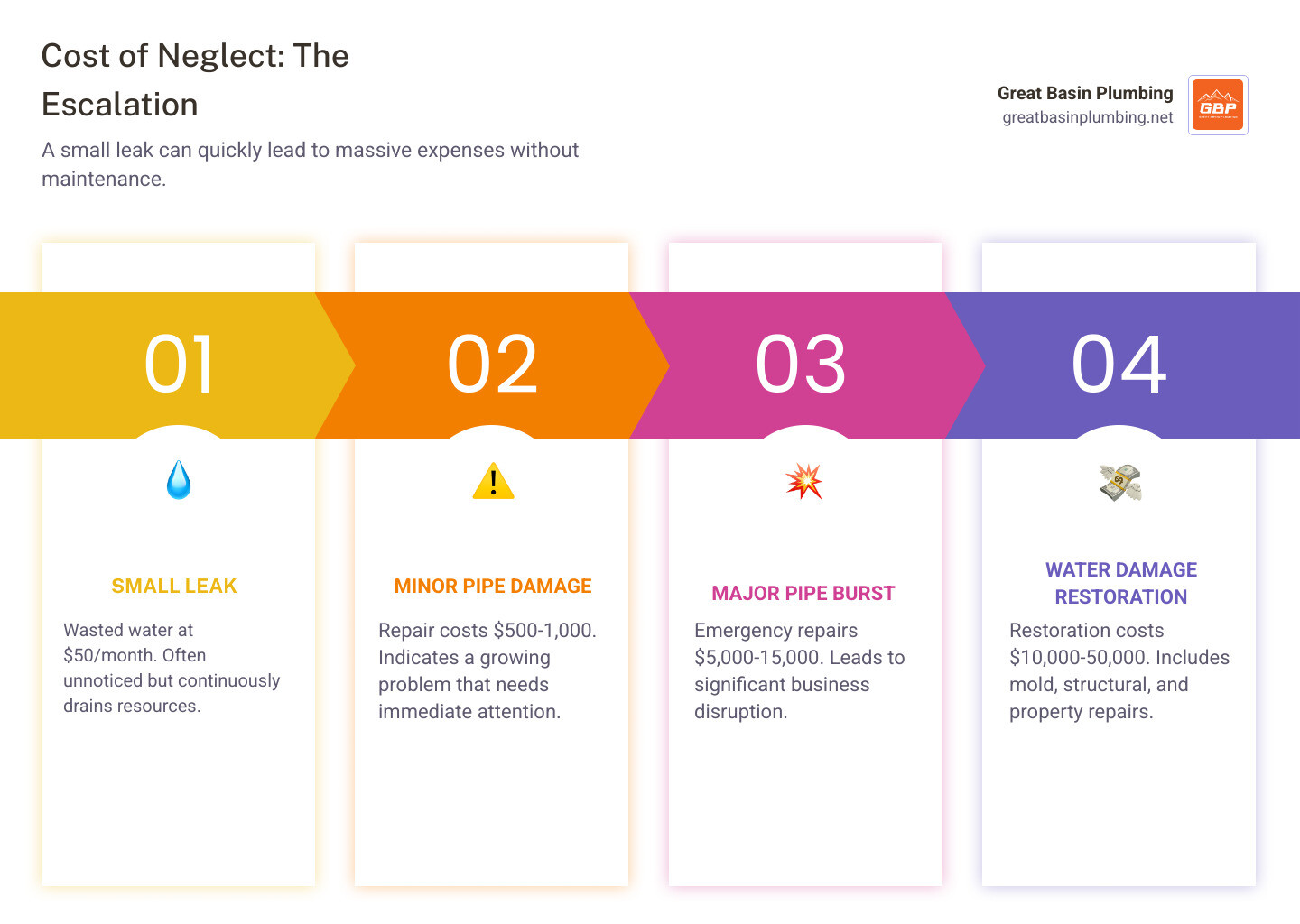
- Business Disruptions and Lost Revenue: Imagine your restaurant’s kitchen drains backing up during peak lunch hours, or the restrooms in your office building becoming unusable. Plumbing problems can disrupt operations, especially if they affect essential functions like water supply or waste disposal. These disruptions can lead to downtime, lost revenue, and a damaged reputation. A significant plumbing breakdown can force a business to shut down temporarily, costing thousands in lost productivity and sales.
- Costly Emergency Repairs: Small leaks or minor clogs might seem insignificant, but they can turn into costly repairs if left unchecked. Routine inspections and maintenance catch these problems early, before they become more expensive. Emergencies often happen at inconvenient times, leading to higher labor rates for immediate service. Waiting until a pipe bursts means paying premium rates for emergency service, not to mention the potential for extensive damage.
- Extensive Water Damage: Water damage can be devastating. Leaking pipes or backed-up toilets may not just damage floors and ceilings but can also affect the structure of the building itself, leading to expensive restoration work. A minor pipe leak in a multi-story commercial building can cause extensive water damage across several floors, leading to high repair costs and potential mold growth.
- Mold Growth and Health Hazards: Persistent moisture from undetected leaks or overflowing drains creates ideal conditions for mold and mildew growth. Beyond property damage, mold can cause respiratory issues for employees and customers, leading to an unhealthy indoor environment. Moreover, a sewage backup could expose everyone in the building to harmful bacteria, posing serious health risks.
- Regulatory Non-Compliance: Commercial buildings are subject to numerous rules and regulations regarding plumbing systems, especially concerning backflow prevention and water quality. Neglecting maintenance can lead to violations of health codes, hefty fines, and potential business shutdowns until issues are resolved.
- Higher Utility Bills: Even a small, silent leak can waste thousands of gallons of water a year, significantly increasing your utility bills. Dripping faucets or running toilets, if ignored, can cost hundreds, if not thousands, on your water bill. Regular maintenance helps us identify and fix these sneaky water-wasters. For more insight into detecting hidden leaks, check out our services for Utah Plumbing Leak Detection.
Key Benefits of Regular Commercial Plumbing System Maintenance
Now for the good news! Investing in regular commercial plumbing system maintenance is one of the smartest decisions you can make for your property. It’s not just about avoiding problems; it’s about optimizing your entire operation.
- Significant Cost Savings: While preventive maintenance is an upfront expense, it’s a fraction of the cost of emergency repairs and water damage restoration. We find that proactive maintenance saves our Utah businesses a significant amount of money by preventing costly breakdowns and service disruptions. Routine maintenance allows for minor repairs and adjustments to be made, preventing larger, more costly replacements down the road.
- Extended Equipment Lifespan: Your plumbing system components—pipes, water heaters, fixtures, pumps—are significant investments. Regular maintenance helps extend their lifespan by addressing wear and tear before it becomes critical. This means you get more years out of your equipment, delaying expensive replacements.
- Improved Efficiency and Lower Water Bills: A well-maintained system runs more efficiently. This translates directly into lower utility costs. We make sure all components are working as they should, preventing leaks and ensuring optimal water usage. An efficient plumbing system is less at risk of emergency repairs and damage that may have occurred before the issue is caught.
- Consistent Water Pressure and Quality: Regular maintenance ensures that your system delivers consistent water pressure, which is crucial for occupant comfort and satisfaction, especially in hotels, gyms, or multi-story office buildings. It also helps maintain water quality, contributing to a healthier environment for everyone in your building. For more information on how we can help improve your water quality, explore our Utah Water Treatment Systems.
- Improved Safety and Health: By preventing leaks, mold growth, and ensuring proper waste disposal, regular maintenance supports a healthy and safe environment. This protects your employees, customers, and tenants from potential health hazards and slip-and-fall risks.
- Peace of Mind: Perhaps the most undervalued benefit is peace of mind. Knowing that your plumbing system is regularly inspected and cared for allows you to focus on your core business operations, rather than worrying about the next plumbing emergency.
Building Your Commercial Plumbing System Maintenance Plan
Creating an effective commercial plumbing system maintenance plan isn’t a one-size-fits-all endeavor. Your building has unique characteristics, and its plumbing system has specific demands. But with a structured approach, you can develop a custom plan that keeps everything flowing smoothly.

Understanding Your System’s Needs
Before we can craft a maintenance plan, we need to understand the heartbeat of your building’s plumbing. This involves looking at several key factors:
- Building Age: Older buildings in Salt Lake City, Ogden, or Park City, with aging infrastructure, different pipe materials, and potentially decades of wear, often require more frequent and specialized attention. They are more prone to corrosion, leaks, and issues with outdated components compared to newer constructions.
- Facility Type: The type of business you operate heavily influences plumbing usage and maintenance needs.
- Commercial Office Buildings: While they might not have the same heavy-duty kitchen demands, office buildings still have high restroom usage. Leaks can go unnoticed for longer periods during off-hours, leading to significant damage.
- Restaurants and Food Service: These facilities have extremely high demands on their drains, grease traps, and water heaters. Clog prevention and grease trap maintenance are paramount to avoid health code violations and operational shutdowns.
- Hospitals and Medical Facilities: These are perhaps the most critical environments. Plumbing failures can impact patient care and safety, and water quality is non-negotiable. Maintenance here often involves stricter guidelines and requires plumbers with specific qualifications.
- Multi-Tenant Properties (e.g., Condominiums, Apartments): While residential in nature, the common plumbing infrastructure of these large buildings falls under commercial maintenance. High usage across many units means increased wear and tear on main lines and shared systems.
- Usage Patterns: A building with 24/7 operations, like a hospital or a manufacturing plant, will naturally put more stress on its plumbing system than a standard 9-to-5 office building. The higher the usage, the more frequent the checks should be.
- Infrastructure Layout and Pipe Materials: Understanding the layout of your pipes, where shut-off valves are located, and the materials used (e.g., copper, PVC, PEX, galvanized steel) is crucial. Different materials have different lifespans and maintenance requirements. For instance, older galvanized pipes are highly susceptible to corrosion. If you’re unsure about your building’s piping, we can help with Utah Plumbing Piping and Repiping assessments.
Creating Your Maintenance Checklist
Once we understand your system, we can develop a customized maintenance checklist. This ensures that all critical components are regularly inspected and serviced, leaving no stone unturned. Here’s a general overview of essential checklist items, broken down by frequency:
-
Daily Tasks (Visual Checks):
- Inspect for any visible leaks around fixtures, pipes, and appliances. Look for puddles, drips, or unusual dampness.
- Listen for unusual sounds like banging (water hammer), hissing (leaks), or constant running water.
- Note any strange odors, especially sewer smells, which could indicate dry traps or vent issues.
- Check drainage speed in sinks and toilets. Slow drainage is an early warning sign of a clog.
- Ensure all fixtures (faucets, toilets) are functioning correctly and not running continuously.
- Encourage staff to report any plumbing anomalies immediately.
-
Weekly Tasks:
- Test water pressure at various points in the building to ensure it’s within the normal range (typically 40-60 PSI).
- Verify water temperature consistency, especially in areas requiring specific temperatures (e.g., commercial kitchens, healthcare facilities).
- Clean faucet aerators and showerheads, as mineral buildup can restrict flow. We often recommend soaking them in white vinegar.
- Run water down all floor drains to ensure trap seals remain filled, preventing sewer gases from entering the building.
-
Monthly Tasks:
- Visually inspect all accessible pipes for signs of corrosion, rust, or wear.
- Check water heater temperature and pressure relief (TPR) valves. A quick, careful test ensures they function properly.
- Inspect and clean drain strainers and catch basins, especially in kitchens.
- Test sump pumps (if applicable) by pouring water into the pit to ensure the float switch activates.
- Look for signs of past leaks, such as dried water spots or oxidation around fixtures, which indicate potential weak points.
-
Annual Tasks (Professional Inspection Recommended):
- Comprehensive plumbing system review by a licensed professional. This includes internal pipe inspections, thermal imaging for hidden leaks, and overall system assessment.
- Water heater servicing: Flushing sediment, inspecting anode rods, and checking all components for efficiency and safety.
- Backflow preventer testing: This is often a regulatory requirement in Utah and must be done by a certified professional.
- Sewer line camera inspection: Especially for older buildings or those with a history of drain issues, a video inspection can identify blockages or pipe damage before they cause major backups.
- Grease trap cleaning and inspection (for food service establishments).
- Valve checks: Ensure all shut-off valves are operational and clearly labeled.
For a more detailed, printable guide, you can Download a sample checklist to get started.
A Closer Look: Key Maintenance Tasks Explained
Understanding what needs to be done is one thing; knowing why it’s important and how it’s typically performed gives you a clearer picture of effective commercial plumbing system maintenance. Let’s explore some of the core tasks.
Drains, Vents, and Grease Traps
These components are the unsung heroes of your wastewater system. When they fail, it’s usually dramatic and messy.
- Clog Prevention and Cleaning: Commercial drains handle significantly more waste than residential ones, making them prone to blockages from grease, food particles, hair, and other debris. Regular cleaning, educating occupants on what not to flush, and using drain catchers are crucial. For stubborn clogs or preventative maintenance, we use a powerful technique called hydro-jetting. This involves using high-pressure water to scour the inside of pipes, clearing massive clogs and buildup.
- Sewer Video Inspection: This is a professional method that allows us to see inside your pipes without invasive digging. By inserting a small camera into your sewer lines, we can identify blockages, cracks, root intrusion, or other damage. This is invaluable for older buildings in areas like Provo or Ogden, or for diagnosing recurring drain problems. For more details on keeping your drains clear, visit our Utah Plumbing Drain Services.
- Odor Control: Persistent sewer odors can indicate a dry drain trap (which allows sewer gas to escape), a blocked vent pipe, or even an issue with your main sewer line. Ensuring all drains have water in their traps and that vent pipes are clear is vital for indoor air quality.
- Grease Trap Cleaning (for Food Service): Restaurants and commercial kitchens rely heavily on grease traps to prevent fats, oils, and grease (FOG) from entering the sewer system. Regular cleaning and maintenance of these traps are not only essential for preventing clogs and backups but also for complying with health department regulations.
Water Heaters and Boilers
Hot water is a necessity for many commercial operations, from restrooms to industrial processes. Maintaining your water heating systems ensures efficiency, safety, and reliability.
- Flushing Sediment: Over time, minerals and sediment can build up at the bottom of your water heater tank, reducing efficiency and shortening its lifespan. Annual flushing removes this buildup, helping your unit run better and last longer.
- Anode Rod Inspection: The anode rod is a sacrificial metal rod inside your water heater that corrodes instead of the tank itself. We inspect and replace these rods as needed, which is critical for extending the life of your water heater.
- Temperature and Pressure (TPR) Valve Testing: This is a critical safety component. The TPR valve is designed to release excess pressure or temperature from the tank, preventing dangerous buildups. We test this valve monthly to ensure it’s functioning correctly.
- Efficiency Checks: We assess your water heater’s overall performance, looking for signs of inefficiency, leaks, or corrosion. This helps identify issues that could lead to higher energy bills or system failure. We typically recommend setting commercial water heaters between 120°F and 140°F, depending on usage, to prevent scalding while also inhibiting bacterial growth like Legionella. For all your hot water needs, check out our Utah Water Heater Services.
Backflow Prevention and Compliance
Protecting the public water supply from contamination is paramount, and backflow prevention devices play a crucial role.
- Protecting Water Supply: Backflow occurs when contaminated water reverses flow and enters the potable (drinkable) water supply. This can happen due to pressure changes in the water system. Backflow prevention devices are installed to stop this reverse flow, safeguarding the health of everyone connected to the water system.
- Contamination Risks: The risks of backflow are severe, potentially introducing chemicals, bacteria, or other pollutants into drinking water. This is why these devices are mandatory in most commercial buildings across Utah, particularly in facilities where cross-contamination is a higher risk, such as medical centers or industrial sites.
- Annual Testing Requirements: To ensure these critical devices are always functioning correctly, annual testing by a certified backflow technician is required by local water authorities throughout Utah. During these tests, we verify that the device is properly installed and that water flows in only one direction. While specific regulations vary by municipality, you can find general guidance on backflow prevention from the Utah Division of Drinking Water. We ensure your devices meet all local and state standards.
- Valve Checks: Beyond the backflow device itself, we check all associated valves to ensure they are operating correctly and can be easily accessed and shut off if needed.
The Role of Professionals in Commercial Plumbing System Maintenance
While some daily checks can be performed by in-house staff, many aspects of commercial plumbing system maintenance require the expertise, specialized tools, and licensing of professional plumbers.
- Specialized Tools and Technology: We come equipped with advanced tools like hydro-jetters, sewer cameras, thermal imaging cameras for hidden leaks, and precision diagnostic equipment. These tools allow us to perform thorough inspections and effective repairs that go far beyond what standard DIY methods can achieve.
- Code Expertise and Regulatory Compliance: Commercial plumbing systems are complex and subject to strict local building codes and health regulations in Utah. Our licensed plumbers are up-to-date on all current codes and ensure your system remains compliant, helping you avoid fines and legal issues.
- Safety Protocols: Working with commercial plumbing systems, especially those involving high pressure, hot water, or gas lines, carries inherent risks. Our professionals adhere to strict safety protocols, protecting both themselves and your property during maintenance and repairs.
- Complex Diagnostics and Troubleshooting: When a problem isn’t immediately obvious, our experience allows us to quickly and accurately diagnose complex issues, saving you time and money. For instance, diagnosing low water pressure can involve checking valves, leaks, pipe corrosion, or pressure regulators.
- Gas Line Safety: Commercial properties often rely on gas lines for heating, water heaters, and kitchen equipment. Maintenance and repair of these lines are highly specialized and must only be performed by licensed professionals to ensure safety and prevent dangerous leaks. We are fully qualified to handle all aspects of Utah Gas Line Plumbing.
Frequently Asked Questions about Commercial Plumbing Upkeep
We often hear similar questions from our commercial clients in Sandy, Draper, and throughout Utah County. Here are some of the most common ones:
How often does a commercial building need plumbing maintenance?
The frequency of commercial plumbing system maintenance largely depends on your building’s type, age, and usage patterns.
- High-Use Facilities (e.g., Restaurants, Hospitals, Multi-Tenant Residential): These buildings often require more frequent attention. We sometimes recommend monthly or bi-monthly maintenance visits to ensure everything is in good working order, preventing minor issues from escalating. For instance, a commercial kitchen might need monthly grease trap inspections and more frequent drain cleaning.
- Standard Commercial Office Buildings: While usage might be less intense than a restaurant, these facilities still benefit from quarterly or semi-annual professional checks, in addition to daily/weekly in-house visual inspections.
- General Recommendation: For most commercial properties, we advise at least an annual comprehensive professional service. This annual check can catch problems that in-house staff might miss and ensures specialized components like backflow preventers and water heaters are properly serviced.
A custom plan based on your specific needs is the most effective approach.
What are the most common signs of a hidden plumbing problem?
Plumbing problems aren’t always obvious, but your building often gives subtle clues. Being vigilant about these signs can help us catch issues before they become emergencies:
- Unexplained Increase in Water Bills: This is a classic indicator of a silent leak. If your water usage suddenly jumps without a clear reason, it’s time for an inspection.
- Gurgling Drains or Toilets: Strange gurgling sounds often suggest a possible venting issue or a developing clog in your drain lines or sewer.
- Sewer Odors: A persistent smell of sewage indicates dry drain traps, blocked vent pipes, or a more serious issue with your main sewer line.
- Fluctuating Water Pressure: If water pressure suddenly drops or varies significantly, it could point to a leak, a clog, or an issue with your pressure regulator.
- Damp Spots on Walls, Ceilings, or Floors: Any unexplained moisture, discoloration, or peeling paint on surfaces can be a sign of a hidden pipe leak within walls or ceilings.
- Sound of Running Water When Fixtures Are Off: If you hear water running even when no fixtures are in use, it almost certainly means you have a leak somewhere in your system.
Can our in-house staff handle basic plumbing maintenance?
Yes, absolutely! Your in-house staff plays a vital role in daily commercial plumbing system maintenance. They are your eyes and ears on the ground and can perform many essential tasks:
- Daily Visual Checks: Staff can easily check for visible leaks, listen for unusual sounds, and report any fixture malfunctions or slow drains.
- Reporting Issues: Establishing a clear system for staff to report plumbing problems immediately is critical. Early detection can prevent small issues from becoming major disruptions.
- Basic Drain Care: Educating staff and occupants on proper disposal (e.g., what not to flush down toilets or pour down drains) and regular cleaning of drain strainers can significantly reduce clogs.
However, certain tasks require the specialized expertise, licensing, and equipment that only a professional plumbing contractor like Great Basin Plumbing can provide:
- Water Heater Servicing: Flushing, anode rod inspection, and TPR valve testing are best left to professionals.
- Backflow Testing: This is a regulated task that must be performed by certified technicians to ensure compliance and proper function.
- Hydro-Jetting and Sewer Camera Inspections: These advanced techniques require specialized equipment and training for safe and effective use.
- Gas Line Work: Any maintenance or repair involving gas lines is highly dangerous and strictly reserved for licensed professionals.
- Complex Diagnostics and Repairs: When a problem goes beyond a simple visual check, professional diagnostic tools and knowledge are essential for accurate identification and lasting solutions.
Partnering with us means your staff can focus on what they do best, while we ensure your complex plumbing systems are maintained safely, effectively, and in full compliance with all Utah regulations.
Protect Your Investment with Proactive Care
At Great Basin Plumbing, we believe that your commercial property is more than just a building; it’s a significant investment, and its plumbing system is the lifeline of your operations. By embracing proactive commercial plumbing system maintenance, you’re not just fixing problems; you’re safeguarding your business, enhancing its efficiency, and protecting the health and comfort of everyone who steps through your doors.
The choice is clear: invest a little now in regular maintenance, or risk paying a lot more later for emergency repairs, property damage, and operational shutdowns. Our team of experienced, local plumbers in Sandy, Ogden, and across the Great Basin region understands the unique demands of commercial systems. We’re here to provide the honest, upfront pricing and reliable service you need to keep your business flowing smoothly.
Don’t wait for a plumbing emergency to strike. Take control of your commercial plumbing system’s health today. For a comprehensive evaluation of your commercial property, explore our full range of Utah Plumbing Services. Let’s work together to ensure your plumbing is one less thing you have to worry about.