
Why Your Basement Needs a Reliable Sewage Lift System
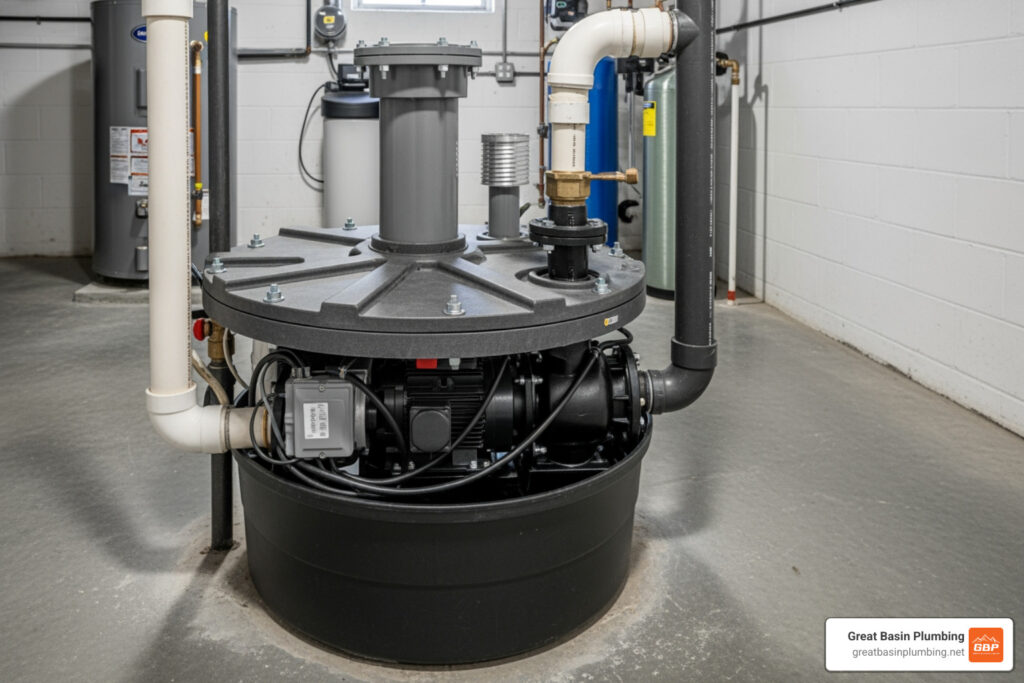
A basement sewage lift pump is a device that moves wastewater upward from below-grade plumbing fixtures like basement bathrooms, laundry rooms, or utility sinks to your home’s main sewer line. Without it, gravity can’t do the job, and sewage has nowhere to go.
Quick Answer: What is a Basement Sewage Lift Pump?
- What it does: Lifts sewage from basement fixtures up to the main sewer line when gravity drainage isn’t possible
- When you need one: Any time you have a toilet, sink, shower, or laundry in a basement below the main drain line
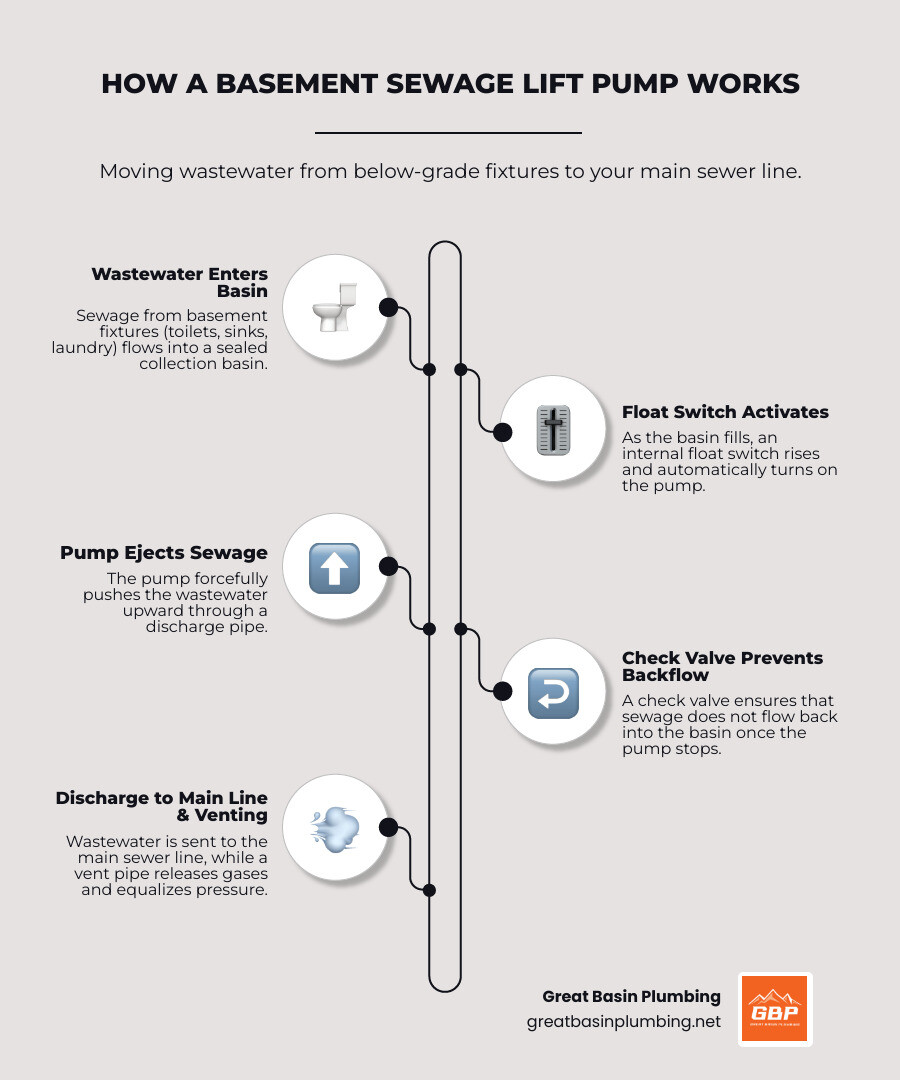
- How it works: Waste flows into a sealed basin (sump pit), a float switch activates the pump when the basin fills, and the pump pushes sewage up through a discharge pipe to the sewer
- Typical cost: $850–$3,800 for installation, depending on complexity
- Common capacity: 30–40 gallon basin with a 1/2 to 3/4 HP motor for most homes
- Vertical lift: Can push sewage up to 30 feet vertically (called “head height”)
If your basement has a bathroom or laundry room, you likely have one of these systems. When it runs smoothly, it’s unnoticeable. But when it fails, raw sewage can back up into your home, creating a health hazard and significant property damage.
Why this matters: Basement sewage lift pumps handle one of the dirtiest jobs in your home. They’re exposed to solid waste, paper, grease, and debris, which means they’re prone to clogs, float switch failures, and motor burnout. Knowing the basics of how your system works and what to watch for can help you avoid costly backups and keep your basement plumbing flowing smoothly.
I’m Reese Mitchell, owner of Great Basin Plumbing in Sandy, Utah. Our team regularly responds to emergency calls for failed basement sewage lift pumps, and many could have been prevented with simple maintenance. In this guide, I’ll cover how these systems work, how to spot problems early, and what you can do to keep your basement safe and dry.
How a Basement Sewage Lift Pump System Works
In a basement, fixtures are often below the main sewer line, so gravity can’t carry wastewater away. A basement sewage lift pump system solves this by acting as a wastewater elevator.
At Great Basin Plumbing, we see these critical systems daily across Utah. A sewage ejector pump collects wastewater from below-grade fixtures in a basin. When the basin fills, a float switch activates the pump, which pushes the wastewater up a discharge pipe to the main sewer line, where gravity takes over.
This process is continuous and automated, helping your basement plumbing operate like any other part of your home. For more information on how we handle these and other complex systems, check out More info about our sewer services.
Essential Components of a Basement Sewage Lift Pump
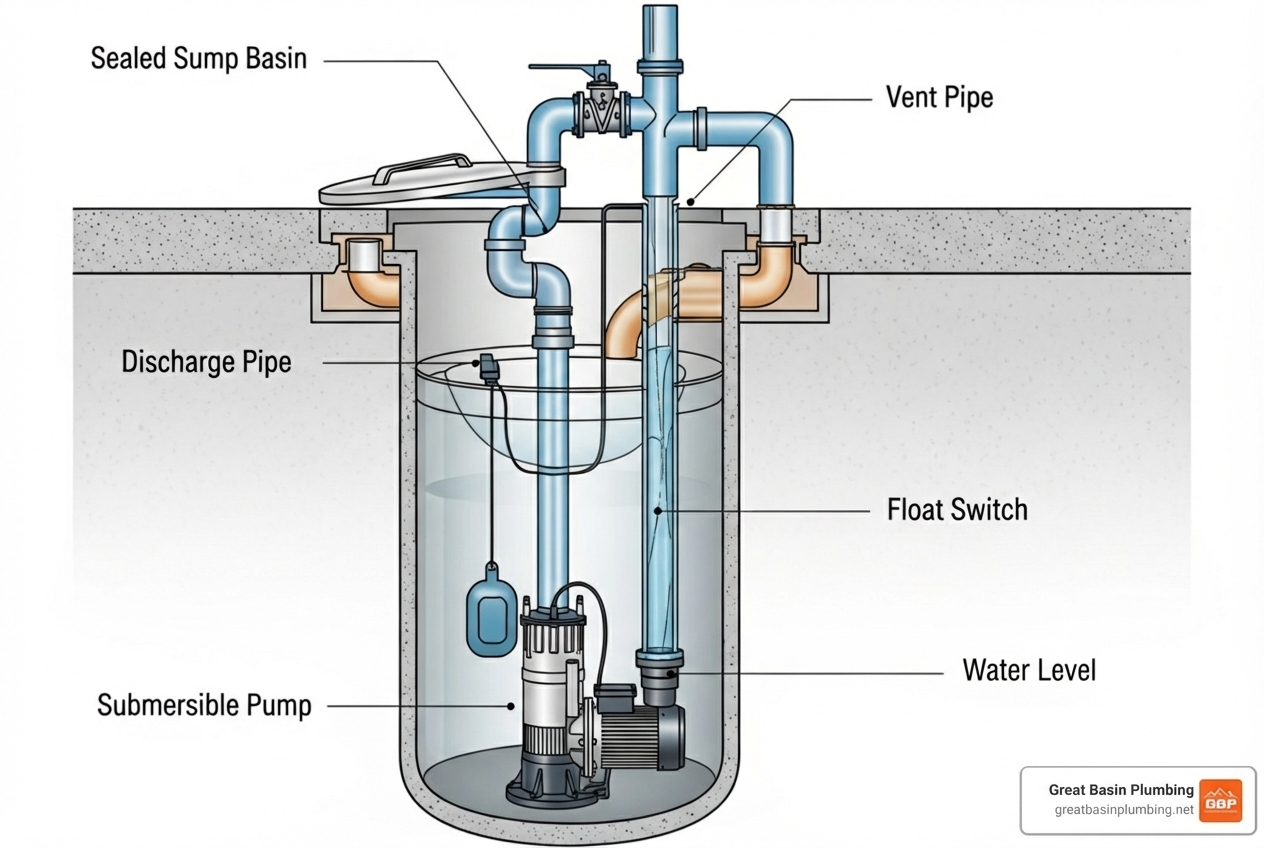
A well-functioning basement sewage lift pump system depends on several key components working together:
- Sump Pit (Basin): A below-grade tank where wastewater from basement fixtures collects. For most residential installations, these basins typically hold about 30 to 40 gallons of waste and are often made of durable, chemical-resistant materials like Polyethylene Structural Foam (PSF).
- Sealed Lid: Covers the basin to contain odors and hazardous sewer gases and to prevent debris, pets, or children from entering.
- Submersible Pump: Sits inside the basin and is designed to handle raw sewage. Residential pumps commonly use a 1/2 to 3/4 horsepower motor and a vortex impeller that creates a whirlpool to move material while reducing clogs.
- Float Switch Mechanism: Acts as the system’s automatic “on” and “off” control. As wastewater fills the basin, a float rises and activates the pump. As the basin empties, the float drops and shuts the pump off. Tangled or malfunctioning float switches are a frequent cause of pump failure.
- Check Valve Function: Installed on the discharge pipe, the check valve prevents pumped sewage from flowing back into the basin once the pump stops. Without it, the pump would have to re-pump the same water, causing unnecessary wear.
- Discharge Line: A pipe, usually 2 to 4 inches in diameter, that carries wastewater from the pump through the check valve and up to connect with your home’s main sewer or septic line (typically 3 to 6 inches in diameter).
- Vent Stack Purpose: The vent pipe equalizes pressure in the basin and allows sewer gases to escape safely outside your home. Some discharge pipes also have a small 3/16″ vent hole drilled just above the pump’s “on” level to prevent air locking, which can cause the pump to run without moving water.
How Far Can a Pump Push Sewage?
When we talk about how far a basement sewage lift pump can push sewage, we’re really talking about “head height”—the maximum vertical distance a pump can lift water against gravity. For the average residential installation, an ejector pump typically can push sewage up to about 30 feet vertically. Once the waste reaches this height, gravity carries it through the rest of the system.
The pump’s horsepower (HP) rating affects how much head height and flow rate it can handle. Residential pumps typically range from 1/2 HP to 3/4 HP, which is usually sufficient for most Utah homes. Commercial applications may require more powerful pumps capable of higher lifts.
When we select a pump for your home, we use manufacturer “pump performance curves” that show how much water a pump can move at different head heights. This helps ensure we install a pump that matches your plumbing layout without overworking the system.
Maintenance and Troubleshooting Common Failures
No one wants to deal with a sewage backup, especially not in their basement. Regular maintenance and knowing how to troubleshoot common issues with your basement sewage lift pump can save you a lot of hassle.
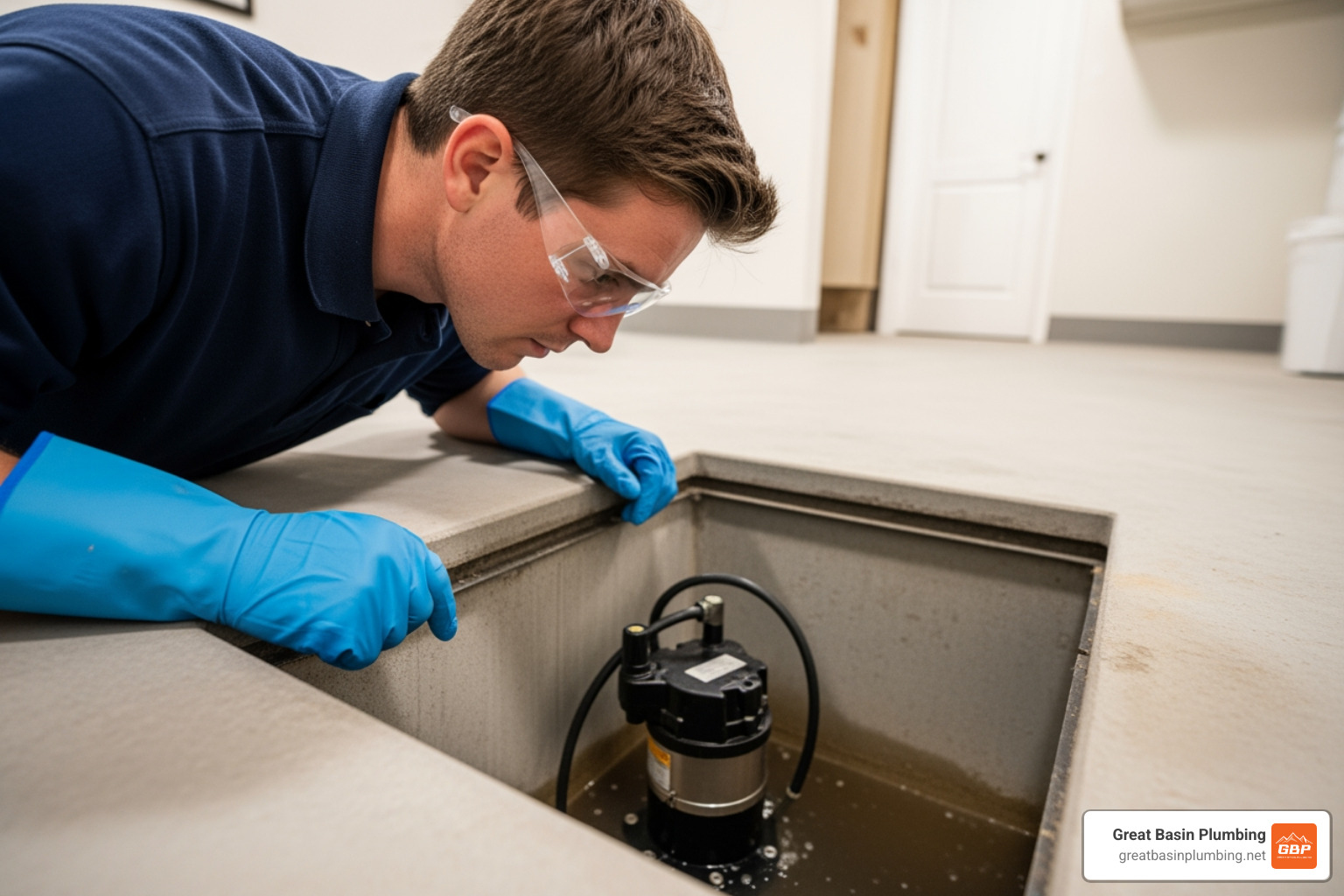
Before troubleshooting, prioritize safety. Working with sewage involves electrical hazards and biohazards. Always wear PPE (gloves, eye protection). Turn off power to the pump at the breaker and verify it’s off before starting. Never reach into the basin with the power on and assume all surfaces are contaminated. For a more detailed guide, you can refer to Repairing a Sewage Ejector Pump: A Step-by-Step Guide.
Signs Your Pump is Failing
Your basement sewage lift pump usually gives you warning signs before it completely fails. Watch for:
- Strange Noises: Grinding, rattling, or unusually loud sounds can indicate a problem with the motor, impeller, or something caught in the pump.
- Pump Runs Constantly (or Short Cycles): Frequent on/off cycling or continuous running may mean a stuck float switch, a faulty check valve allowing backflow, or a leak in the discharge line.
- Pump Won’t Turn On: The pump might be silent, or it might hum without pumping. Possible causes include a power issue, failed float switch, jammed impeller, or burnt-out motor.
- Foul Odors: Sewage smells in your basement often point to a poorly sealed lid, a blocked or disconnected vent pipe, or a leak in the system.
- Slow Drainage: Slow drains in basement fixtures can indicate that the pump is struggling or that a blockage is developing before the pump.
- Alarm Activation: A high-water alarm means the water level in the basin is higher than it should be, usually because the pump isn’t keeping up or has stopped working.
- Sewage Backup: If raw sewage is backing up into your basement fixtures, the pump has likely failed or there’s a major clog.
Troubleshooting Your Basement Sewage Lift Pump
If your basement sewage lift pump starts acting up, you can perform a few basic checks. Always follow the safety precautions above:
- Check Power Supply:
- Breaker/GFCI: Look at your electrical panel to see if the circuit breaker for the pump has tripped. Reset it if needed. If the pump is on a Ground Fault Circuit Interrupter (GFCI) outlet, check and reset that as well. Repeated tripping indicates a more serious electrical problem.
- Plug Connection: If it’s a cord-and-plug pump, confirm that the plug is firmly seated in the outlet.
- Float Switch Obstruction:
- Visual Inspection: With the power off, carefully open the basin lid and check for debris like wipes or rags that could be restricting float movement.
- Manual Test: Using a non-conductive tool, gently lift the float switch to see if the pump would normally turn on. If it works when lifted, the float may have been stuck or mispositioned.
- Clogged Impeller:
- If the pump hums but doesn’t move water, the impeller may be jammed. With the power off and pump removed (only if you are comfortable and it is safe), inspect the intake and impeller for debris such as rags, hair, or hardened grease.
- Stuck Check Valve:
- Listen for water flowing back into the basin after the pump shuts off. Visible leakage at the check valve or frequent short cycling can mean the valve is not sealing properly.
- Airlock Issues:
- If the vent pipe is blocked or missing, air can become trapped in the discharge line and prevent the pump from moving water effectively. A clear vent and a small air bleed hole in the discharge pipe help prevent air locking.
If these basic troubleshooting steps don’t resolve the issue, or if you’re uncomfortable performing them, it’s best to call a professional. For serious clogs or drain issues, When you need emergency drain cleaning we are here to help.
Best Practices for Pump Maintenance
Preventative maintenance is your best defense against unexpected basement sewage lift pump failures. A little effort goes a long way:
- Quarterly Testing: Every three months, pour a few gallons of clean water into the basin to confirm the pump and float switch activate correctly. Also, test your high-water alarm if you have one.
- Annual Inspection: Once a year, use proper safety gear to open the lid and check the basin for debris, confirm the float switch moves freely, and examine pipes and valves for wear.
- Never Flush Wipes (Even “Flushable” Ones): These do not break down like toilet paper and are a major cause of clogs and jammed impellers.
- Avoid Grease and Oils: Grease solidifies inside pipes and can block the pump intake or discharge lines.
- Keep the Lid Sealed: Make sure the basin lid is always tightly secured to contain odors, protect against debris, and maintain system pressure.
- Professional Check-ups: Consider periodic professional inspections. Our team at Great Basin Plumbing can perform thorough checks, identify potential issues early, and ensure your system meets local codes. Schedule a plumbing inspection with us today.
Ejector vs. Effluent Pumps: What’s the Difference?
When you’re dealing with wastewater systems, you might hear several terms: sewage ejector pump, grinder pump, and effluent pump. While they all move water, they’re designed for different tasks. Understanding these distinctions helps ensure you have the right pump for the right job in your Utah home.
- Sewage Ejector Pump: The typical basement sewage lift pump for below-grade bathrooms and laundry. It moves “blackwater”—wastewater containing human waste and toilet paper—from fixtures to the main sewer line and can usually handle solids up to about 2 inches in diameter.
- Grinder Pump: A specialized sewage pump with cutting blades that grind solids into a fine slurry. This allows wastewater to move through smaller-diameter pipes and over longer distances. It also handles blackwater but excels where tougher solids or long runs might overwhelm a standard ejector pump.
- Effluent Pump: Designed for “greywater”—wastewater that does not contain human waste, such as from sinks, showers, and washing machines. Effluent pumps are commonly used to move partially treated water from a septic tank to a drain field. They are not meant for toilet waste.
The key differences:
- Solids Handling: Sewage ejector pumps handle typical residential solids; grinder pumps grind solids; effluent pumps are for mostly liquid waste with very small solids.
- Application: Sewage ejector and grinder pumps are for blackwater (toilets and similar fixtures). Effluent pumps are for greywater only.
- Cost: Grinder pumps are generally the most expensive due to their grinding mechanism. Effluent pumps are typically less robust and less expensive than sewage ejector or grinder pumps.
Using an effluent pump where a sewage ejector is needed will lead to premature failure and a messy cleanup. If you’re unsure about the right type of pump—or if you are comparing sump pumps, sewage ejector pumps, and grinder pumps—our experts can help. Learn more by reading Learn about sump pumps vs. sewage pumps.
Installation, Costs, and System Requirements
Installing a basement sewage lift pump is a significant home improvement project that can greatly improve the functionality and value of your home, especially if you’re adding a basement bathroom or laundry room in areas like Sandy, Orem, American Fork, or Salt Lake City. However, it’s a job that demands precision and adherence to plumbing codes.
Pros and Cons of Installing a Sewage Ejector Pump:
Pros:
- Adds Functionality: Allows for plumbing fixtures in basements or other below-grade areas.
- Increases Home Value: A finished basement bathroom or laundry room is a major selling point.
- Convenience: Provides the comforts of above-ground plumbing anywhere in your home.
- Prevents Backups (when working): Properly installed and maintained, it efficiently removes wastewater.
Cons:
- Initial Cost: The installation can be a significant investment.
- Maintenance: Requires regular checks and good habits to prevent failure.
- Potential for Failure: Like any mechanical system, it can break down and cause backups if neglected.
- Noise: While generally quiet, some pumps can produce noticeable noise during operation.
Installation Cost: The typical cost of installing a basement sewage lift pump system in a home ranges from $850 to $3,800, with many projects falling near the middle of that range. Costs vary based on pump type, installation complexity (such as breaking concrete), local labor rates, and materials.
DIY vs. Professional Installation: We strongly recommend professional installation for a basement sewage lift pump. The job involves proper sizing, electrical wiring, venting, and code compliance. Incorrect installation can lead to failures, health hazards, and costly repairs. Our licensed plumbers at Great Basin Plumbing ensure a correct, safe installation that adheres to Utah regulations.
Key System Requirements for a Basement Sewage Lift Pump
A reliable basement sewage lift pump installation should meet these core requirements:
- Sealed Basin: The sump basin must be completely sealed at the top to prevent sewer gases and odors from entering your home and to keep debris out. Residential basins typically hold 30 to 40 gallons of waste.
- Proper Vent Pipe Connection: A vent pipe equalizes air pressure within the basin and directs harmful sewer gases outdoors. This vent should connect to an existing soil stack or run directly through the roof.
- Adequate Discharge Pipe Diameter: The outlet pipe leaving the pump is usually 2 to 4 inches in diameter so solids can pass without clogging, then connects to your home’s 3- to 6-inch main sewer line.
- Check Valve Installation: A check valve must be installed on the discharge line above the pump to prevent backflow of sewage into the basin after each pump cycle.
- Dedicated Electrical Circuit: A basement sewage lift pump should have a dedicated electrical circuit to ensure consistent power and reduce the risk of overload.
- Alarm System: A high-water alarm is highly recommended. It gives you early warning if the pump fails to activate or keep up, so you can respond before a backup occurs.
What to Do When Your Basement Sewage Lift Pump Fails
It’s the scenario no homeowner wants to face: your basement sewage lift pump has failed, and you’re seeing or smelling the signs of a backup. Knowing what immediate steps to take can minimize damage and keep your family safe.
Immediate Steps:
- Stop Using Water Immediately: Stop all water usage in the house. Any water from fixtures connected to the system will worsen the backup.
- Turn Off Power to the Pump: If it’s safe, unplug the pump or turn off the dedicated circuit breaker at your electrical panel. This helps prevent the pump from burning out if it’s running against an obstruction.
- Assess the Situation (from a safe distance): Note whether drains are slow or sewage is actively overflowing. Pay attention to any unusual noises or strong odors.
- Recognize the Biohazard Risk: Raw sewage contains harmful bacteria, viruses, and other pathogens. Avoid direct contact, keep children and pets away, and ventilate the space if possible.
- Call a Professional Plumber: Unless it’s a simple fix like resetting a tripped GFCI or clearing an obviously tangled float switch you can safely reach, it’s time to call the experts. At Great Basin Plumbing, we offer 24/7 emergency services across Utah and have the tools and safety equipment to handle sewage problems correctly.
When a basement sewage lift pump fails, raw sewage can back up into your house. This poses a significant health risk and can cause extensive property damage. Trying to fix a complex pump failure yourself without the right knowledge or tools can make things worse or expose you to dangerous conditions. For issues with your drain pipes, whether from a sewage backup or something else, we can help. More on drain pipe repair.
Conclusion
The basement sewage lift pump is an unsung hero in many Utah homes, keeping below-grade plumbing functional and basements dry. Understanding how it works, recognizing early warning signs, and following a simple maintenance routine are the best ways to avoid inconvenient and costly sewage backups.
We’ve covered how these systems overcome gravity, the role of each major component, the differences between ejector, grinder, and effluent pumps, and what to do when something goes wrong. Habits like never flushing wipes or grease, testing the pump quarterly, and keeping the basin sealed can dramatically extend system life and reduce emergencies.
At Great Basin Plumbing, we provide installation, maintenance, and emergency repair for basement sewage lift pumps throughout Sandy, Utah County, Salt Lake County, and surrounding communities. Whether you need a new system, a routine inspection, or urgent help with a failing pump, our experienced team is ready to keep your basement plumbing flowing smoothly. For any plumbing needs, big or small, Contact us for expert Utah plumbing services today.